| OCR Text |
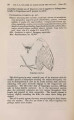
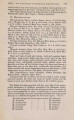
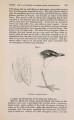
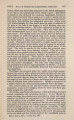
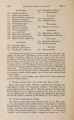
Show 1870.] MR. R. B. SHARPE ON BIRDS FROM MADAGASCAR. 395 China, and Japan do not present the least differences. I regret I cannot agree with him as to the identity of the South-African birds, which appear to contain constant characters whereby they may he at once distinguished. The male always has a conspicuous white rump, far more so than in P. rubicola ; and this white rump is exhibited in the female of P. torquata, but is altogether wanting in the female of P. rubicola. I have a series of both species before me. Lastly, as regards P. sibylla, which I have always looked upon as one of the most distinct of all the true Stonechats. The nearest ally of the Madagascar bird is, as might be expected, P. torquata; but it may be distinguished by the pure white belly aud under tail-coverts, and the more sharply defined lower margin of the rufous breast, which seems to form a band of red, whereas in P. torquata it gradually shades off into the huff of the abdomen. Comparing the females of the two species together, that of the Madagascar bird is altogether greyer in tint above, and not so strongly tinged with buff on the abdomen. 17. COPSYCHUS PICA. Copsychus pica, v. Pelz.; Hartl. Faun. Madag. p. 38 (1861); Grand. Rev. et Mag. de Zool. 1867, p. 368; Schl. & Poll. Faun. Madag. p. 95 (1868). "Nossi Vola, Nov. 10th, 1869. Native name Fittat ala." " Vodirat, 25 miles N.W. of Antananarivo." Fam. MOTACILLIDJE. 18. MOTACILLA FLAVIVENTRIS. Motacilla flaviventris, Verr.; Hartl. Faun. Madag. p. 39 (1861) ; Roch & E. Newt. Ibis, 1862, p. 273 ; Scl. P. Z. S. 1863, p. 163 ; E. Newt. Ibis, 1863, p. 346; Grand. Rev. et Mag. de Zool. 1867, p. 385. In plumage this bird seems a connecting-link between the Pied Wagtails and our Grey Wagtail (Motacilla sulphurea), and possesses characters uniting the two sections of the genus Motacilla. In habits it appears strikingly similar to the last-named species. Fam. PLOCEID,E. 19. PLOCEUS PENSILIS. Nelicurviuspensilis (Gm.); Hartl. Faun. Madag. p. 54 (1861); E. Newt. Ibis, 1863, p. 349; Grand. Rev. et Mag. de Zool. 1867, p. 388. Ploceus pensilis, Schl. & Poll. Faune Madag. Ois. p. 108(1868). "Nossi Vola, Nov. 11th, 1869. Native name Foode ala." This Weaver-bird differs conspicuously in the sexes, the male hav-in°- a beautiful black head, while the female has the head dusky olive, relieved by bright yellow cheeks, forehead, and eyebrow. I give a detailed description of the adult male and female, and also of a young male. |