| OCR Text |
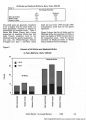
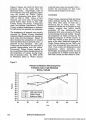
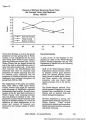
Show A REAL SOLUTION TO A REAL PROBLEM: BABY YOUR BABY A discussion of an unique intervention program to increase access to prenatal care, by John C. Nelson, MD, MPH, FACOG Health care costs will approach $900 billion in the United States in 1993. The number of citizens currently without health insurance is 37 million and rising. Serious questions are being asked about the value of care that is being provided. Every sector of the health care industry seems willing to make suggestions to the other sectors about what could or should be done to alleviate the problem, but far less enthusiasm is shown about what that sector itself can offer. The magnitude of these combined issues is discussed in the Congress, the corporate boardroom, the doctor's office, and nearly every home in America whenever there is an encounter with the health care delivery system. The complexity of the system is staggering and any proposed change, no matter how sincere, is instantly assailed by special interest groups. The nature of health care today is so complex that many experts in technical areas have little understanding of distinct but related facets of health care that pertain to their own work. Conversely, those who may have a more global perspective of health care often lack the necessary technical expertise to understand a given procedure, device, diagnosis, or treatment. Natural boundaries within the many health related professions, not to mention tradition in some cases, make meaningful interaction among practitioners difficult if not impossible. By far the most visible of problem with the U.S. health care system is the total cost of health care plus the fact that the costs continue to rise more rapidly than any other area of the economy. It is, therefore, tempting to target cost as the main point at which to direct health system reform. However, to isolate costs without understanding their inextricable link to access to, and quality of, care is shortsighted and, most likely, inappropriate. It is also important to observe that the politics of the situation may easily override the science of health care because of the cost factor. The two major types of approaches to reforming the health care system are to do it incrementally or to have a major change all at once. While the latter option may be socially desirable, it is politically unlikely, and most probably, technically unfeasible. Therefore, it is striking to observe a much simpler approach to a large problem that concurrently offers increased access to care for those who previously had little or no care, improved quality of care in a predictable and measurable fashion, and decreased overall costs. The Problem The State of Utah has traditionally had a very high birth rate. It is usually the highest in the nation and is often twice the national average. Interestingly, however, the infant death rate has usually been very low. In fact, it was the lowest in the United States in 1973 at 12.7 deaths per thousand live births. At the same time, the incidence of low birthweight babies was at 5.5%, a very respectable rate. The infant death rate continued a steady decline until about 1983, when it leveled off. The next four years showed a plateau effect. While the infant death rate was still low, it had not decreased in that four year period, and many states surpassed Utah's rate. More worrisome, however, was the fact that during this same time, the post-neonatal death rate and the percentage of low birthweight babies both increased slightly. A study conducted by the Utah Department of Health revealed that pregnant patients on Medicaid had almost twice the rate of delivery of babies weighing less than 1500 grams compared to the entire population. At the same time, it was also determined that these patients, on average, received far fewer prenatal Utah's Health: An Annual Review 1993 117 |