| OCR Text |
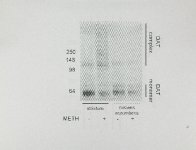
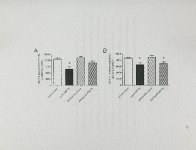
Show 43 hyperthermia or prior treatment with the DA-depleting agent, a-methyl-p-tyrosine, attenuates both OAT complex formation (Baucum et aI., 2004) and the persistent dopaminergic deficits caused by the stimulant (Schmidt et aI., 1985; Bowyer et aI., 1992). Additionally, METH-induced OAT complex formation does not occur in the nucleus accumbens (Hadlock et aI., 2009), a brain region that is refractory to the METH-induced persistent dopaminergic deficits (Thomas et aI., 2009; Eisch et aI., 1992; Cass, aI., 1997). The 1997; Haughey et aI., 1999; but see also Broening et present findings further suggest an association between OAT complex formation and persistent METH-induced dopaminergic deficits since both phenomena are attenuated by 02 receptor antagonist pretreatment, even when hyperthermia was maintained in the eticlopride pretreated rats (see also Broening et aI., 2005). In conclusion, the present study suggests an association between METH induced OAT complex formation, decreases in VMAT2 immunoreactivity, astrocytic activation, and persistent dopaminergic deficits as each is prevented by 02 antagonist pretreatment. While these results do not prove causal relationships among these events, they allow speculation that early (within 24 h) alterations in OAT and VMAT2 contribute to astrocytic activation, and that each contributes to the persistent dopaminergic deficits caused by the stimulant. These findings provide novel insight into not only receptor mediated mechanisms underlying the effects of METH, but also the interaction among factors that are likely associated with the persistent dopaminergic deficits stimulant. caused by the |