| OCR Text |
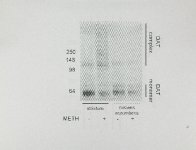
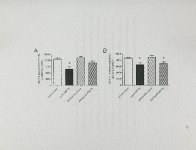
Show 22 decrease in OAT activity observed at 1 h may have been reversed by 24 h. nearly or completely Further, since OAT complexes are not observed until 12 - 24 h after METH treatment (Baucum et aI., 2004) and their formation is attenuated by 02 antagonist pretreatment, a second 02 receptor-mediated event may be contributing to complex formation by a mechanism independent of the earlier (within 1 h) effect on OAT function. In either scenario, the complex role of 02 receptors in regulating the impact of METH on DAT is apparent. Baucum et al. (2004) were the first to suggest that OAT complex formation may be associated with the persistent dopaminergic deficits caused by METtH since either administration of alpha-MT or prevention of hyperthermia attenuates both complex formation (Baucum et aI., deficits caused Further by the stimulant (Schmidt et aI., 1985; Bowyer et aI., 1992). support for this assertion preventing DAT 2004) and the persistent dopaminergic comes from findings complex formation, pretreatment with a that in addition 02, but not a to 01, receptor antagonist attenuates METH-induced persistent dopaminergic deficits in rats maintained 2005). hyperthermic throughout METH treatment (Broening et aI., Noteworthy, previous studies have shown that pretreatment with 01 receptor antagonists (Angulo et aI., 2004; O'Dell et aI., 1993; Albers and Sonsalla, 1995) and 02 receptor antagonists (O'Dell et aI., 1993; Albers and Sonsalla, 1995) attenuate METH-induced dopaminergic deficits. However, these studies did not assess the ability of the 01 and 02 receptor antagonists to attenuate the persistent dopaminergic deficits independent of their attenuation of METH-induced hyperthermia. |