| OCR Text |
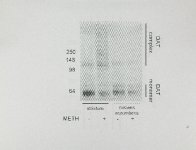
Show 5 aI., 1993) and facilitates the reverse transport of DA after METH administration (Sulzer et aI., 1995), not surprisingly, OAT is an important factor in METH toxicity (Schmidt and Gibb, 1985b; Fumagalli et aI., 1998). Additionally, and as cytosolic DA is released by METH, the vesicular sequestration of DA, mediated by the vesicular monoamine transporter 2 (VMAT2), is important in METH toxicity. example, pretreatment with the VMAT2 inhibitor, reserpine, worsens For the dopaminergic deficits caused by METH (Wagner et aI., 1983; Thomas et aI., Additionally, heterozygous 2008). VMAT2 knock-out mice exhibit increased METH-induced dopaminergic deficits (Fumagalli et aI., 1999). Many studies have examined the impact of amphetamines, including METH, on OAT function. For instance, in vivo studies have shown that a single high-dose injection of METH rapidly (within decreases OAT 1 h) and reversibly (within 24 h) activity (Fleckenstein et aI., 1997). In contrast, multiple high dose METH injections, administered in a pattern designed to mimic "bingeing" in METH abusers, which rapidly (within 1 h) decrease OAT activity (Metzger et aI., 2004) persists 24 h following the last injection (Kokoshka et aI., 1998). DA, reactive oxygen species, and hyperthermia contribute to this rapid phenomenon (for review, see Fleckenstein et aI., 2000). Multiple high-dose METH injections also cause the formation of OAT complexes (Baucum et aI., 2004). While the mechanisms underlying OAT complex formation are not completely understood, METH-induced OAT induced complex formation is attenuated by prevention of METH hyperthermia or pretreatment with the DA synthesis inhibitor, alpha methyl-p-tyrosine (Baucum et aI., 2004). Reactive species are implicated in OAT |