| OCR Text |
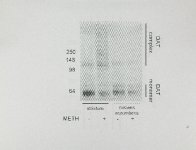
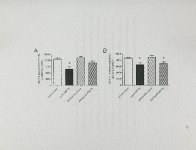
Show 13 prepared from treated rats. As with METH-induced striatal dopaminergic deficits, OA, reactive species and hyperthermia contribute to this rapid decrease in OAT function (for review, see Fleckenstein et aI., 2000). In addition to effects described above, METH repeated, high-dose administrations also cause the formation of high molecular weight (greater than approximately 120 kOa) treatment. induced This OAT-associated phenomenon is complexes, attenuated as assessed 24 h after by either prevention of METH hyperthermia or pretreatment with the OA synthesis inhibitor, alpha methyl-p-tyrosine (alpha-MT; Baucum et aI., 2004). Reactive species are also implicated in OAT complex formation, as in vitro exposure to the reducing agent, beta-mercaptoethanol, reverses this process (Baucum et aI., 2004). Concurrent with METH-induced OAT complex formation, METH treatment causes a loss of OAT monomer immunoreactivity and a decrease in OAT function (Baucum et aI., 2004). However, mechanisms underlying these and phenomena, their relationship to OAT complex formation, remained to be elucidated. Further, the regional specificity of OAT complex formation remained unknown. Accordingly, the present study addresses these issues. Results revealed regional specificity in OAT complex formation, and that this phenomenon was not exclusive to METH treatment. Further, the data demonstrated METH-induced a negative correlation complex formation and loss of OAT function. between Finally, these studies, taken together with previous reports, suggest a multifaceted role for 02 receptors in affecting METH-induced alterations in the OAT and its function. |