| OCR Text |
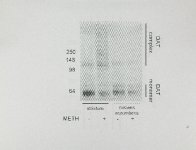
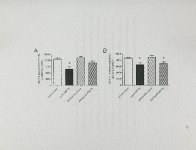
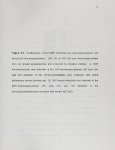
Show 40 well as a loss of VMAT2 immunoreactivity, persists 24 h following treatment (Chu et aI., 2009; work Eyerman and Yamamoto, 2005). The present studies extend this by demonstrating that the loss of VMAT2 immunoreactivity after 24 h is attenuated with by pretreatment the Similarly, pretreatment with eticlopride immunoreactivity after 72 h. 02 receptor attenuates antagonist, the reduction eticlopride. in VMAT2 These results are of significance as several studies have indicated that aberrant VMAT2 function contributes to the monoaminergic For example, pretreatment with the VMAT2 inhibitor, deficits caused by METH. reserpine, worsens the dopaminergic deficits caused by METH (Wagner et aI., 1983; Thomas et aI., 2008). Additionally, heterozygous VMAT2 knock-out mice exhibit increased METH-induced Noteworthy, treatment of dopaminergic deficits (Fumagalli et aI., 1999). with mice pituitary adenylyl cyclase activating polypeptide, 38 amino acids increases the expression and function of VMAT2 and attenuates METH-associated astrocytic activation (Guillot et aI., 2008a). The involvement of 02 restricted to VMAT2. In receptor activation in the effects of METH is not particular, both the METH-induced increase in OAT complex formation and decrease in OAT activity observed after 24 (Hadlock et aI., 2009) and 72 h (Figure 2.4) are attenuated by 02 antagonist pretreatment. Thus, 02 receptor-mediated mechanisms underlie both the METH-induced alterations in OAT and VMAT2 24 - 72 h after treatment. As oxidative stress likely contributes to OAT complex formation (Baucum et aI., 2004; Hadlock et aI., 2009) and METH-induced alterations in VMAT2 may contribute to oxidative stress (for review, see Fleckenstein et aI., 2009), it is |