| OCR Text |
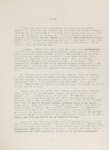
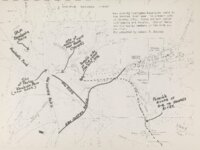
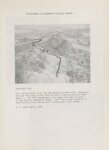
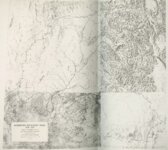
Show researchers into bel ieving that the padres ascended 1esa Gigante, a 1,000 foot-high mesa that lies in that direction from Laguna ueblo. Actually, only began in an east-northeast two-league circuit around a low hi I I, the the route from Laguna; after dirction turned east-southeast. a tral I To reach EI Alamo from Laguna the travelers would have fol lowed the Santa Fe Railroad tracks down to the point where they intersect 40, then they would have fol lowed the present freeway to the campsIte. In!erstate RESEARCH AND ton 40. INTERPRETATION Participants who, on in this day's study were W.L. Rusho and C. Gregory Cramp July 10, 1975, traveled the entire distance by jeep on Interstate For references to Interpretation USGS Whipple's notes attached to book and Wheeler's map, see days December 13-16. Research and Maps consulted: AMS, Albuquerque, Socorro: NMHD quadranges 40, 52; quads Laguna, Mesita, Mesa Gigante, Dough Mountain, South Garcia. December 23 On the 23rd set out from here, and after going four east-southeast, we arrived at leagues east, the mission of San Agustin de la Isleta. Today nine leagues. five RESEARCH AND Part of we and INTERPRETATION C. Gregory Crampton line in the Bolton translation has been omitted. The Chavez complete. In describing the day's travel between EI Alamo and the pueblo of Isleta, Escalante states that the party traveled five leagues east and four east-southeast. translation a is Traveling five leagues eastward the padres would have stayed on a par allel course, but south of Interstate 15 unti I reached the Puerco River, they which is about 13-14 miles, or five leagues, from EI Alamo, or Sheep Springs. 'At the Puerco they turned east-southeast and traveled about 14 mi les, five and a quarter leagues, not four leagues. The time al lotted for study of this section of the Dominguez-Escalante Trail did not permit us to examine this route beyond short day's segments at either end. However, the Wheeler Atlas Sheet No. 77, about published 1879, shows a route that was probably very close to the trai I fol lowed by the Spaniards. This route can be on modern superimposed in the maps only most general terms. From the Rio Puerco, south of the' Rio Puerco Trading Post (on Interstate 40), there are some unimproved roads that follow an east-southeast course to Isleta. The old trai I would have crossed the 500-foot-high mesa separating the Rio Puerco from the Rio .Grande and l+ long woul d -206- |