| OCR Text |
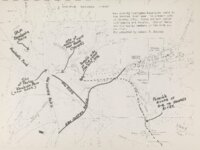
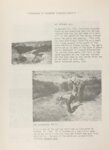
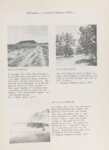
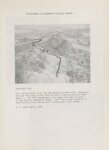
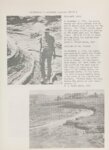
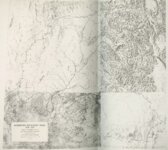
Show November On the 12th 12 set out from San Proto headed traveling now on an open course and we south-southeast good terrain (3 leagues), and on the same course found a smal I spring of good water where al I the and the horse herd drank after the ice was broken. According to what the vestiges show, it is a stopping place for the Cosninas when they travel We continued south along the same to the Payuchis. course, feeling extremely cold, and after traveling four leagues of very good country, we left the direct route to Moqui, as it had been indicated by the men traveled by the south-southwest; then, after going sma I I dwel lings or de one league, we found several serted camps, and indications that many herds of cattle and horses had been pastured hereabouts for some time. We kept on along the same course, and after we had gone a league and a half southwest, night came and we halted without water, naming the site San Jacinto. Today nine leagues and a half. Payuchis, and fol lowed the one more Cosninas toward the RESEARCH AND INTERPRETATION W. L. Rusho Save for the cold weather, this was a fairly easy day for the travelers who made good time on open trail that gradually approached Kaibito Wash. As they rode upstream to the south they crossed a few tributaries of Kaibito Wash but none posed any barrier. in one of these tributaries at a vi I lage. The smal I spring they located was found point about five miles northeast of Kaibito It should be noted that the first distance indicated by Escalante, three left out of the Chavez translation. It does inadvertently in the Newberry Library copy of the diary. leagues, appear was Leaving the spring the Spaniards headed south over fairly easy terrain, crossing Kaibito Wash about one mi Ie north of Kaibito vi'I lage. The trail at this point turned southwest around two substantial, obstacles: the great bulk of White Mesa, which stretches ten mi les across the landscape from south west to northeast, and the canyon of Kaibito Wash, which drains the slopes to the north of White Mesa. From Kaibito the trail ascended low hil Is covered with scrub pinion and juniper forest. About two leagues south of Kaibito the trail crested the ridge and the travelers could see the junction where the trail split. The road to the Hopis headed south-southeast, passing east of Wildcat Peak, whi Ie the road to the Cosnlnas headed southwest toward Preston The latter route, which the padres took, leads across a Mesa. generally open val ley vegetated with grass and small brush, but with occasional clumps of juniper trees. About three or four mi les southwest of this junction the trail is now crossed by the Black Canyon and Lake Powel I Rai I road which carries coal from the strip mines at Black Mesa to the near Navajo Powerplant -184- Page. |