| OCR Text |
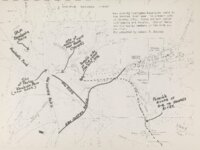
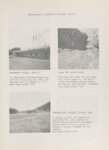
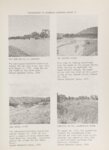
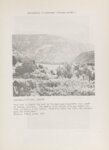
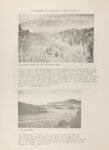
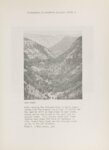
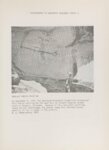
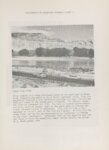
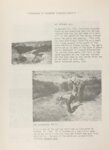
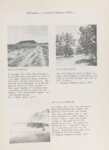
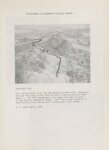
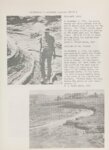
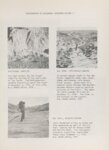
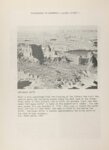
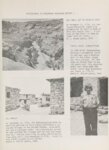
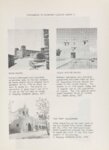
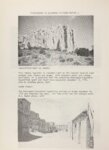
Show A wei i, "Standing Rock vehicle. cluster of sandstone rocks near found water. Well," is the point located in a weirdly eroded where Escalante says they Whi Ie unrelated to the Dominguez-Escalante expedition, a set of curious vehicle grooves was noted in several places where the road crossed bedrock. Each of the twin grooves was about a foot wide and one or two inches deep. The smooth surface of the grooves and the lack of lug marks tend to rule out a bulldozer. A large number of heavi Iy loaded wagons could have cut the grooves, but a historical ,episode of such magnitude throuqh this remote area is unknown to the present researchers. To place their camp, EI Espino, in a proper relationship to Pasture they reached the next day, it is necessary to locate the camp sl ightly west of a hypothetical point reached by Escalante's directions alone. Partly this could be due to magnetic compass declination. At any rate, EI Espino was not near any distinctive topographic feature but was merely out in a large field of bedrock sandstone and sand dunes. It was on the present road about five mi les directly north of Tuba City, Canyon, which Arizona. RESEARCH METHODS This day's travel north from Tuba City. and Don Cecala. covered by four-wheel drive vehicle travel ing were W. L. Rusho, C. Gregory Crampton, Although only one road leads north from Tuba City, this road generally paral leis the ,Escalante route. Near Preston Mesa, however, the road veers somewhat farther to the east than does the trai I. A long distance overview of the trai I and terrain was obtained from surrounding the crest of Preston Mesa. Maps used: was Researchers USGS AMS Marble Canyon; AHDCoconino County, Sheets 27,28. November 14 On the 14th we left EI Espino southeast, and after going a league we found enroute a big headed south less than a waterhole of 'good water little where the entire horse herd drank to satisfaction. We "kept going southeast, and at three of a league quarters we entered a canyon where four springs of good water We traveled southeast emerge. through it for a half a leaque, and arrived at a smal I farm and camp of theCosninas, a l I of it pretty and well arranged--the is irrigated by means of the four mentioned and by two other copious ones which rise next to it; here this year the Cosninas planted maize, squash, watermelon, and muskmel Ion. By the time we arrived they had gathered their harvest and, jdging from the refuse or scraps of everything we found, it had been an abundant one, and especially that of beans. For farm!and srings, -186- |