| OCR Text |
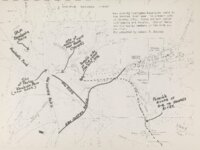
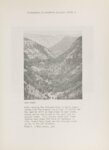
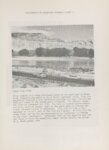
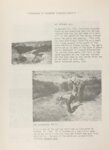
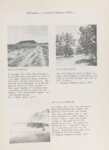
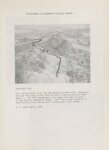
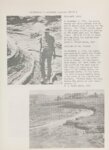
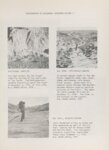
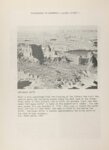
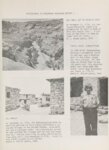
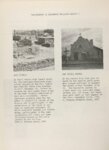
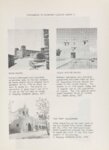
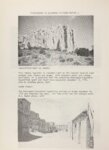
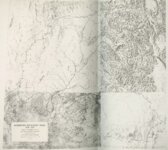
Show if we had made camp here, we could have gleaned half bushel of it. The farmland is surrounded by peach trees. a Besides the several huts made of boughs, there was In very wei I constructed little house of stone and mud. it were the baskets, jars, and other utensi Is of these In dians. There judging from the tracks, had gone away some days before, perhaps to look for pinon nuts in the adjacent high sierra toward the south-southwest. Trails went off a from the camp in different directions, and we did not know which one to take to go to Moqui, for we could no longer go farther afield looking for the Cosninas, as much from the lack of supplies as from the extreme severity with which winter was plaguing us. We took a trai I which went southeast, traveled for leagues over altogether flat country, passing by some springs of good water, and we crossed a sma I I river which two flows from notrhtast to southwest and carries as much water an adequate irrigation ditch. It has its sma I I poplar and sma I I meadows with grove very poor pasturage where we crossed it. the river we climbed a mesa where there Beyond was a sma I I lake and several banked pools of rain water, and they serve as ponds and watering places for the Moqui cattle which we were already beginning to see in numerous herds. We traveled over the mesa for two and a half leagues to the east-southeast, went up a high hil I, and because night was approaching and there was good pasturage for the horse herds as halted--naming the place Cuesta de los Llanos because fro begin the spreading plains and countryside having no mesas, woods, or sierras, but very good pasturages which extend southeastward far beyond Moqui. Today six leagues and we here a quarter. C. RESEARCH AND INTERPRETATION From their camp at EI traveling over patches of Espino Gregory Crampton Spaniards took a southeasterly course, interspersed with areas of bedrock. After the red sand the head of Pasture Canyon. They enter going about four mi les they reached four found four and Presently, sand springs. over slopes easi ed i steep Iy level at ground or"slightly conspicuous large springs burst from aquifers Other springs do occur in the above in alcoves on the east canyon wal I. The than the four mentioned. vicinity, but they are much less obvious at inter are seen that fields combined waters of al I these springs irrigate to Pasture head from its the Canyon canyon mittent intervals throughout A constant flow of water reaches Reservoir, a distance of about 2.75 mi les. the for water irrigated fields of the Hopi vi I lage the reservoir which stores and downstream overlooking Moenkopi Wash. farther mi les of Moenkopi two cornfields, cottonwood trees, and hundred-foot-high red sand del ightful today as it must have been in stone wal Is, Pasture Canyon is as is the only waterThe canyon, a five-mi Ie-long oasis in the deser 1776. With its -187- |