| OCR Text |
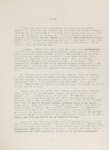
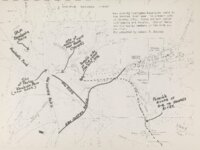
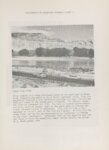
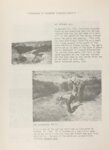
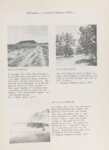
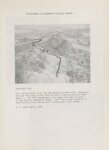
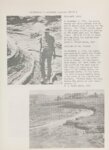
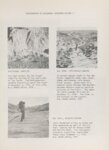
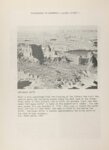
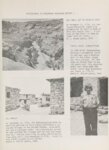
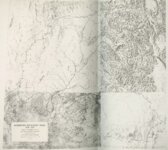
Show RESEARCH METHODS Since the character of the area has been changed considerably by the be development of the Clear Lake Waterfowl Refuge, much of the route his Jerome and with Discussions Stoffel, however, Msgr. conjecture. reports of the methodology used by George E. Stewart, who worked with him of the route, led us to believe that the route now fol lowed on his must have been the one that the party took. road the desert After con by tacting the Beaver River, the route becomes rather "cut and dried" since the party continued to fol low the river. ust . portion October 4 On the 4th we set out from El Tejedor up the arroyo toward the south, and at the quarter-league swung a little to the south-southwest; then, after going somewhat less than five leagues we reached the south pass and exit of Llano Salado. In the arroyo mentioned we found more water, and not as bad as yesterday's and beautiful meadows greatly abounding in good for the horse herds, which by now were very much pasturage exhausted because the brackish waters had done them much harm. And so we stopped here, naming the site Las del Puerto. Today five Vegas leagues. RESEARCH AND INTERPRETATION Ted J. Warner and Thomas G. Alexander The route ascends the Beaver River in a south-southwesterly direction toward a pass which separates the Black Rock Desert from the Escalante To the west are the Cricket Mountains' and to the Desert. east the Pahvant which Range swing here toward the west-northwest ending about five mi les northwest of North Twin Peak where the pass is located. This "South Passu marks the exit from the Llano Salado or Salt Plain into Beaver Bottoms which form the northern reaches of the Escalante Desert. The campsite is about 7.5 miles south of Bloom Siding of the Union Pacific Rai I road west of the Beaver River. The USGS map (1:250,000 revised 1962) shows a railroad siding known as "Cruz" near this point but a rather uncomfortable ride on a dirt road paral leI to EI Tejedor revealed no such place. The distance from Las Vegas del Puerto was five leagues or about 13 mi les. RESEARCH METHODS Over this portion of the route the only maps avai lable are the 1:250,000 revised by the USGS. The route of travel is quite straightforward, however, since it paral leis the Beaver River. The principal difficulty came in locating campsites. For this, the various versions of the journal, compass reading, map measurements, and automobile were clocking by used, since the estimates were for distances actually traveled rather than horizontal distances. Army Map Service maps -132- |