| OCR Text |
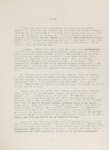
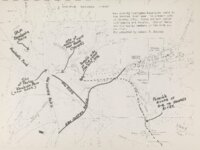
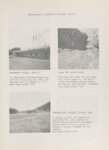
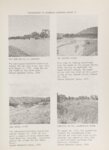
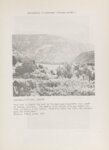
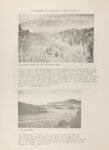
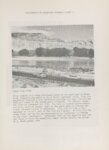
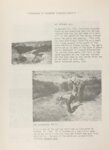
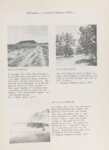
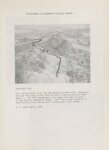
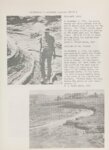
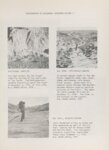
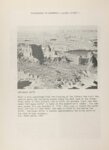
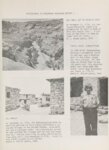
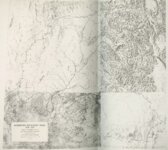
Show RESEARCH AND INTERPRETATION Ted J. Warner and Thomas G. Alexander From San Rustico campsite south of Mi Iford the expedition left the Beaver River and traveled southwest through the Escalante Desert approximately paralleling the present route of the Union Pacific Rat I road tracks. From here the upstream southeast along present city of Minersvi I Ie route the Beaver River would have taken which is southeast of the San Rustico campsite. From San Rustico, however, they began to ascend the Escalante Desert toward the southwest, and the land is somewhat more brush and broken in this region than it is north of Mi Iford. The area directly south of Mi Iford near San Rustico is today cultivated but further to the south the land consists principal'y of sagebrush-covered rangeland. The hi I I with hot springs on the east side and top is the northernmot of two hi I Is south of Thermo Siding on the Union Pacific. The water is warm to hot, sulphurous, and contains some iron in solution which we surmise from its rust color. The ponds near the springs are covered with rushes and the soi I of the hi I I itself is quite alkaline. This is an important reference point in determing distances, because the hil I is a landmark that can be pinpointed with some certainty. From the smal I hil I, the Escalante-Dominguez party proceeded south about five more mi les a long the foot of the Black Mounta ins to a .cemps i te at a po i nt now known as Brown Knoll, about two mi les east of the Union Pacific Rai I road tracks. There is a sma I I ravine in the eastern edge of the knol I that would have been ideal for camping, as it would have afforded shelter from the desert and mountain winds. At its base the ground is wet and is used today as a watering place for range cattle. This wet land would have afforded water for their animals. They journeyed six leagues or about 15.8 miles to this camp which they named San Eleuterio. them to the RESEARCH METHODS Beginning with this day's investigation and on through the end of our research had the assistance of Mr. David Vickstrom of the Cedar office of the Bureau of Land City Management. He has spent considerable time in attempting to locate the route of the expedition and was of incalculable assis tance to us. He had previously located the thermal springs mentioned in the and we confirmed from the Chavez translation diary, that the northernmost of two possible hi I Is must be the one mentioned. the use of 15 minute Again, USGS maps and compass with measurements checked by automobile odometer were used. and travel, we October II On the 11th we course. Je • We • • • • startd left San Eleuterio . out . . . . . . . . again, Quickening on . . a . south . . by east . . . . . our pace as much as possIble, havIng come from San Eleuterio ten leagues, two south by east, three south-southeast (already of Nuestra Senora de la leaving the plain Luz), a fourth southeast and a fourth . south-sotheast, three and a half southeast of good a woods of pinon and terrain; juniper along a then, gOIng through -136- |