| OCR Text |
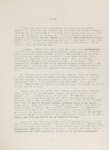
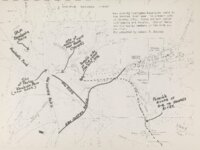
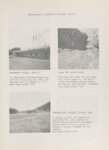
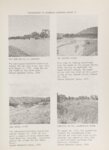
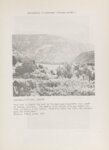
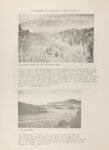
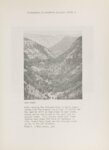
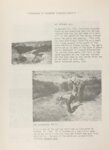
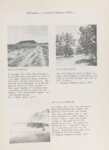
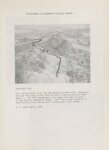
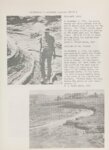
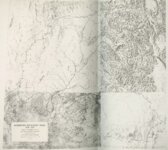
Show wide ravine in which, after going one league we found a meadow with very much pasturage. We trned northwest along the same ravine, and a west, going leagues drink, as we find water tonight. three horses we paused awhile did not know if let the to we would Afterward we kept on going direction and, at a little more than a quarter-league, swung north-northwest [Bolton has north-northeast], going up an incline of so difficult an ascent that we doubted ever reaching the top because, besides its being very steep in places, there was not even a footpath and--as it consisted of very loose dirt--the mounts could not gain a sure foothold anywhere. Its ascent must be half a league long, and when one reaches the top there are some shelves of very brittle flagstone [shale?] where two pack mules lost thei r foo+l ng and rolled down more than twenty yards at the least. But God wil led that they did not tumble upon any of those fol lowing behind, and that they come out unhurt. in the same We climbed foot and underwent our share This is why we named fatigue big it La Cuesta del Susto. On it our guide gave us irrefutable proof of his sincerity and lack of guile. Having climbed the slope, we traveled half a league north-northeast [Bolton says north of it and on scares. northwest] going down a short stopped at a really scanty narrow water we ley, and spring, naming val the site La Natividad de Nuestra Senora, where there was middling pasturage for the mounts. Today a little more than five leagues and a· quarter. RESEARCH AND The party INTREPRETATION left La Floyd Contraguia what Escalante described as one on the league O'Neil and Gregory C. Thompson A. morning of west to the September 7 and traveled point where Carr Creek Creek as being the enters Roan Creek. Here Escalante interpreted Carr main body of the ravine, which it appears to be. The travelers then pro gressed up Carr Creek three leagues, watered their horses, and climbed a very steep shale hi I I to the northeast to ascend to the divide between the drainages of the Colorado and the White rivers. They then turned northwest and +rave l ed to an area where springs exist to this time. They named their campsite La Natividad de Nuestra Senora. This site we interpret to be three-fourths of a mi Ie north of the Rio Blanco county line in the northwest quarter of section thirty-two. Travel was a little more than 5.25 leagues or about 3.4 miles per league. -84- |