| OCR Text |
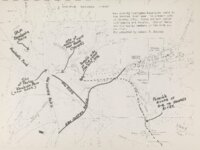
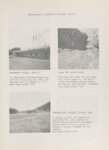
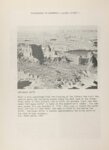
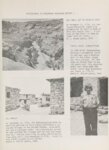
Show To the not as good. waterholes also , but here scanty and , sierra s the at bluffs little west-southwest from the same water. base there is also a little spring of permanent . october 23 On the 23rd from around surrounding we undertook no day's march, to give those here a chance to calm down, and those of the seeds and The wi Id area to come over. plant had bought and eaten made us quite sick, We could of giving us nourishment. 1nstead us weakening usual the meat, and not get these people to sel I us any of flesh the prepared for so we had a horse slaughtered and other stuff we tak'ing along. RESEARCH AND C. INTERPRETATION Gregory Crampton From their camp at Santa Barbara the Spaniards headed north-northeast toward the low Shinarump Cliffs, the most prominent landmark on their left. We believe they found Olivares some distance up a rather prominent sma I I and the most likely canyon cutting through the Shinarump Cliffs in this area This is located in Sec. 17, T41N, RIW, G and SR Meridian. to find water. place From th i s po i nt the men cou I d see for mil es, the dark green crown of the Kaibab Plateau bulking ahead of them. They traveled right along for 10.5 then and Wash Johnson up a tributary, White Sage Wash, going miles, crossing reaching a point about On the basis of at this point one mile south of information obtained turned south. When the the Arizona-Utah from the boundary. Indians earlier, route seemed uncertain the the men party headed Their position at the start was just north east across the Kaibab Plateau. road across the Kaibab, used in the 19305 (?) alternate of the Winter Road, an Escalante's brief'description of 89 closed was when U. S. Highway by snow. Its su rface is covered with a is first we the Ka i bab Plateau" have, good one. hard, Ka ibab I lmes tone , and there are numerous rocky ledges and sma II and large canyons. Oddly, Escalante does not mention the pinion-juniper forest. Offlctals of the Bureau of Land Management say that the forest, possfbly We did less dense than it is now, covered this part of the Kaibab in 1776. see some juniper trees estimated to be over 200 years old. It was a tough, thousand-foot climb up the steep western slope of the plateau. On top the Spaniards crossed the old wagon road, opened about a century later, in the 1870s, which by way of Lee's Ferry was the early The route connecting link between the Utah settlements and those in Arizona. has been recently marked by the BLM as the "Honeymoon Trail," so named because young people from Arizona traveled the road to be married in the Mormon temple at St. George, Utah. -156- |