| OCR Text |
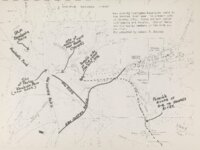
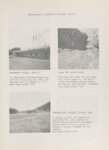
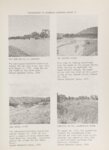
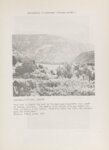
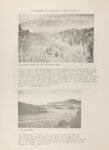
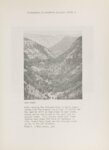
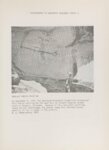
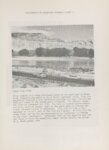
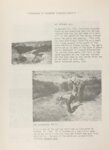
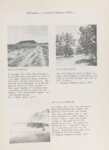
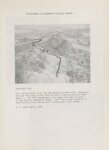
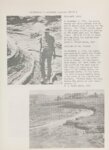
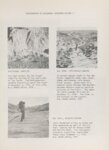
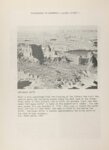
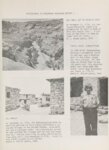
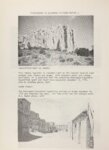
Show lofty stone hogbacks which, after forming a corral, come so closely together that one can barely out the gorge through which the river comes. between two sort of make According to our guide, by the single ford one cannot cross anywhere in this vicinity, which lies on the side west of ·the hogback on the north, very near to a chain of small bluffs of loose dirt, some lead-colored It consists of finely ground and others of a yel low hue. and the there water not reach the mounts' shou I der does rock, else than it has blades, whereas everywhere else that we saw they cannot cross We halted by its southern edge about a without swimming. mile from the ford; we cal led the site La Vega de Santa Cruz. The latitude was taken by the north selves at 410 19' latitude. RESEARCH AND INTERPRETATION star, and we found G. our CI e I I J a cob s The route this that was in in al I probabil ity fol lowed closely the Old ute Trail as major trail from Uintah to the White River. Hayden reported places the trail was worn a foot deep with traces worn into the a This would be fairly close to the base of Blue Mountain and sandstone. Cliff Ridge. The journal mentioned finding a spring at the foot of the There are several springs along this route today, but the most sierra. likely one to fit the description in the journal was at the western ter- mininus of Cliff Ridge where Cliff Creek cuts through Sand Ridge. After Cliff Creek turns west it cuts through Sand Ridge between two high red cliffs where it leaves the gorge or cliffs to wind its way to the Green River thr.ough gentle rol ling hi I Is. The trai I taken by the party was almost certainly one of the minor trails that went to the north of Cliff Creek northwest to the Camp Vega de Santa'Cruz of Rio de San The major Indian trail remained to the south of Cliff however, until it reached the meadows. Perhaps the padres were heading Buenaventura. Creek, anxious to get a better view of Split Mountain to the north. There is much conjecture bout the camp location and the ford of the river because of the· description given of Spl it Mountain. If one reads carefully the account in the journal and visits the site, it wi I I be amply clear that the description of the river above Split Mountain and Split Mountain was given by one viewing it from a distance, not close, up. What appears to be gorges steep are on only one rock formatios. The gorge of Split Mountain is only side; the other slopes gently to the high cl iffs on the west side of the gorge. Survey plats the traditional of the Ute ford: the bend of river the 1874 show the old Indian trai I going to the camp spot was about a mile below in the meadow and among the trees. area in therefore, -96- |