| OCR Text |
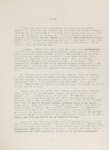
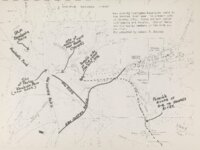
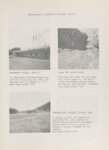
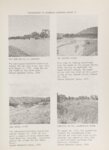
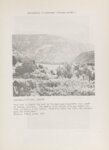
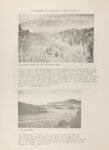
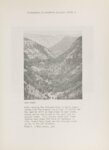
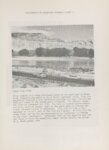
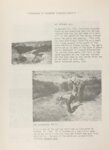
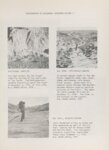
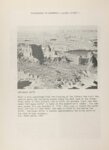
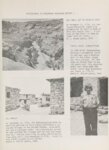
Show finely ground the rock alum, little Rio de San brief meadows which and alongside of it are we clened and crystal line. We went down league along its the river, Jnd without leaving flat, very Lino, and after going a turned west downstream. Here another I lone enters it, and there are pretty bends in both of them and everything just right for sheepherding camps. After go i ng west downstream for +h ree-quarters of a league, we saw sma and passed by three copious springs of hot water that we touched tasted, and it is of the same sulphurous qual ity as the one adjacent to EI Pueblo de San Diego of the Jemez Indians in and New Mexico. We continued west another three quarters of a league, entered the narrowest part of the river's canvon, and swung Here there are th ree other water spr i ngs north for ami Ie. immediately ahead, and al I come out at the base extremely high bluff very close to the river on this This is why we northern side, and they flow into the river. In this narrow part of the named it Rio de Aguas Calientes. canyon +here are some difficult but improvable stretches. like those of an We went for half a league northwest, crossed over to the other side of the river, went up a brief slope, and caught sight of the lake and spreading val ley of Nuestra Senora de la Merced of the Tipanogotzis (This is what we name it from here on) ••• We went down to the p I a in, a I ready enter i nq +he va I ley: crossed the river once more and, after going over its spreading meadows and along its northern edge for somewhat more than a league, we crossed to the other side and halted we one of its southerly meadows, wbich we named Nombre de Jesus. Today five leagues and a half on Vega del Dulcisimo •.•. Fray Francisco Atanasio set ou! for the first we halted, together with Si Ivestre the guide, camps his partner Joaquin, and Andres Muniz the interpreter. Then after racing the horses as much as they could even to the point of exhaustion, so as to get there this afternoon, and for six and a half leagues north-northwest, they got to them Padre as soon as .•.. RE SEARCH AND I NTERPRETAT I O Jerome Stoffel and George E. Stewart The campsite of San Lino is located in what Is known now as Palmyra Camp. From there the Dominguez-Escalante trail fol lowed rocky hi I Is for about a mile. Not clear is whether it crossed to the left side or stayed right. Soon the trai I entered meadows, which may have required one or two more crossings of the stream, and then after approximately five miles entered Spanish Fork Canyon. Down canyon a I ittle more than a mi Ie, one encounters the hot springs known as Casti 110 Springs. A mi Ie and a half farther on the canyon turns north, and on the riqht side is the other set of springs mentioned by Escalante. These are not hot today as they may have been in 1776, possibly due to earth movements. on the -116- |