| OCR Text |
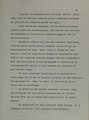
Show 73 In the writings of all the monarchomachs there was a common denominator -- natural law.12 they agreed, Above positive law, exists a body of principles with which man-made law must be in accord. Where the two do not conform, there is under apprOpriate circumstances not only a right but a duty to resist. As would be expected, a significant difference existed between the Protestant monarchomachs and the Catholic monarchomachs. In the words of Harold J. Laski: The Protestants, broadly Speaking, preached their doctrine of , . . resistance until the accession of Henry IV of France, when the possibility of toleration, should he prove victorious, tempted them to abandon their former position for either the doc- trine of the Politiguesl3 or a reaffirmation of in- defeasible hereditary right under divine sanction. It is at this point that the Catholic writers take up the tale. Horrified at the prOSpeCt of a heretical monarch. . . they insist that sovereign power belongs to the peeple, who delegate it by contract to the prince; where the latter does not fulfil the neces- sary conditions of good government, the contract may be broken, whereupon sovereignty reverts to the peOple, who may choose a new ruler. Another way of categorizing the various monarchomachs is by whether they postulate a single contract involving only the.pe0ple and the king, or a double contract between. 12Harold J. Laski, article on Monarchomachs, Enc clopaedia of the Social Sciences (New York: 578. Macmillan Co.;, P. 13A party of moderates whose members were usually Catholics and which believed peace could be established only by strengthening the king as a focal point of national unity. DesPairing of crushing Protestantism by force, toleration for the sake of peace and unity. 14Laski, op. cit. they advocated |