| OCR Text |
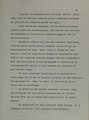
Show 249 one of his own countrymen, an adherent of his own faith, a member of a super-patriotic organization called the Hindu Mahasabha which became convinced that Gandhi was a traitor to his own class - a situation not unknown before or since. What place, then, does a discussion of Gandhi have in a treatise on the ideology of political assassination? It is not Gandhi himself that is important here, of course, but his philosophy, which has several ramifications when dealing with the history of assassination as an idea. Tb begin with, nonmviolent resistance can be looked upon philOSOphically as a descendant of the doctrine of nonresistance or passive obedience, Passive obedience, as may be recalled from the earlier discussion of it in these pages, is the notion that the secular ruler is God's deputy and that, consequently, he is not to be disobeyed with the sole ex~ ception of when he issues orders contrary to God's command~ ments. Even then, the disobedience should take the form of non-compliance to such orders rather than active opposition to them, since as one author put it, "It is the worst men who are most inclined to rebellion" and since violence breeds violence. By contrast, non-violent resistance as Gandhi espoused it required a fair degree of moral perfection on the part of those practicing it. Instead of breeding violence, the policies Gandhi advocated were intended to have the opposite |