| OCR Text |
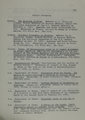
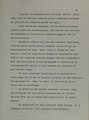
Show 253 not between-two or more different societies. As one American journal put it: The major reason why the Indians practiced non~violen ce successfully in the past and are not able to do so today is to be found not in the difference between Briti sh and Chinese but-in the difference between India at the time of Gandhi and India today. In the interim, India has become a nation-state, with rigid boundaries, a centralize d government, and 'national interests.'...Non-violence is a person-to-person and people-to-peOple method, and once people begin to think of themselves and others as citizens of rival governments, they can hardly practice it. Nonviolence must be used to defend human rights, not natio nal rights...To be viable, non-violence must challenge both the militarigm and the injustice of the society in which it Operates. _At any rate, such reservations -- both Gandhi‘s and those of his critics a; should be kept in mind as the philu osophy of passive resistance is explored further. Gandhi's philOSOphy of passive resistance can be traced directly back to the writings of Count Leo Tolstoy and Henry David Thoreau, an intellectual debt that Gandhi himself openly acknowledged. Without belaboring the point, it was in Thoreau‘s essay "On the Duty of Civil Disobedience" that Gandhi encountered the notion that there are times when an in- justice is so great that no set of consequences outweighs the obligation to resist the injustice. Thoreau wrote, unjustly wrested a plank from a drowning man, it to him.though I drown myself." ' 5Ashakant Nimbark, (December, 1962), p- 107. Or, "If I have I must restore "When a sixth of the "Liberation," Social Research |