| OCR Text |
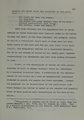
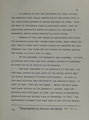
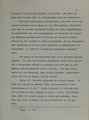
Show 218 Lockets thinking is readily discerned in the first part of the second paragraph of the Declaration, which is known by virtually every schoolboy: We hold these truths to be self-evident, That all men are created equal, that they are endowed by their creator with certain unalienable rights; that among these are life, liberty and the pursuit of happiness; that to secure these rights govern- ments are instituted among men, deriving their just powers from the consent of the governed; that when_ ever any form of government becomes destructive of these ends, it is the right of the peOple to alter or to abolish it. , . Nor is there anything new in the fact that Lockeos ideas had a great impact on the Federalist Papers, which admitted a right of revolution. In essay forty-three, James Madison justified the rather revolutionary action of the Federal Convention in discarding the Articles of Confederation by "the transcendent law of nature and of nature's God, which declares that the safety and happiness of society are the objects to which all political instittu tions aim, and to which all such institutions must be sacrificed." Likewise, Alexander Hamilton wrote, "If the representatives of the peOple betray their‘constitum ants, there is then no resource left but in the exertion of that original right of self-defense which is paramount to all positive forms of government, and which against the usurpations of the national rulers, may be exerted with infinitely better prOSpeCt of success than against |