| OCR Text |
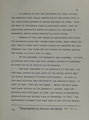
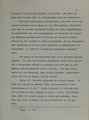
Show 174 governments in Latin America,}.9 Among seventy nation-wide examples of nmachetismou in Colombia alone in the 19th century, Stokes notes that one conflict alone took 80,000 lives, while another lasting from 1899 to 1903 took 100,000 lives. The term umachetismo" comes from the word "machete," the general utility knife used widely throughout Latin America, and refers to the mobilization of naked force, mainly in local, but occasionally also in national, Stokes puts it, rural areas urban areas. As "Whoever can command the authority repreu sented by the machete in rural areas possesses political power of an important nature and automatically constitutes a factor to be reckoned with in the affairs of govern- 10 ment.n Another frequently employed instrument of power politics in Latin America is the gglpe de estado or coup dvetat in which the president is immobilized either through detention or assassination. With the major exception of the Mexican Revolution, however, the history of Latin America ~- for all its violence -- has not been a history of revolutionary move- ments designed to remold the institutional bases of society. 9William S. Stokes, "Violence as a Power Factor in Latin-American.Politics," The Western Political Quarterly, V (September, 1952), p. 445. 1°Ibid. |