| OCR Text |
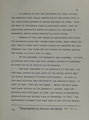
Show 252 use of passive resistance "influenced the British government to offer an Indian constitution which, much as it fell below Gandhi's demands, was nevertheless a concession."2 Gandhi insisted that had the Jews resorted to nonviolent resistance it would have improved their lot in Nazi Germany -- a thesis that cannot be empirically prlved or dis~ proved. As to India's use of military force in recent years, Gandhi himself conceded twenty years before his death that when freedom came, violence. India would not adhere strictly to non- In this way, Indians seek to justify their seizure of Goa by calling it a "liberation" movement, in support of that stand: and quote Gandhi "In free India, Goa cannot be allowed to exist as a separate entity in opposition to laws of a free state."3 As for China‘s border encroachments, Gandhi is quoted as having declared: "I don't say eschew violence in your deal- ing with robbers or thieves or with other nations that may invade India."4 Mbreover, there is some recent thought to the effect that non-violent resistance can work only within a society, 21bid._ 3Ashakant Nimbark, "Gandhism Re-Examined," Social Research (Spring, 1964), p. 102. 41bid., p. 103. |