| OCR Text |
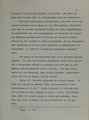
Show 172 The religious element also predominates in those few passages on political assassination in Hindu theory. In the Samtitarvan, for example, the sage Vamadeva is made to say that the king must follow righteousness, and that the unjust king who employs sinful ministers should be slain by the peeple.5 In the Mahabharata, the Hindu philosoPher Bhisma also argues that the king who only pretends to protect his people without actually doing so, should be slain by his allied people like a dog afflicted with rabbies.6 In the Sukranitisara, period, a work of the late medieval tyrannicide is justified, at least by implication, on the ground that while the good king is actually a part of God, the bad king is a part of nthe demon.»7 At first glance, the contention that religion stifled the philos0phy of assassination in medieval Islam might seem inconsistent with the contention in Chapter III of this dissertation that religion influenced the flowering of such philosophy in medieval EurOpe. But we are talking about two different religions, not just one. In Islam, a word which means the acceptance of the divine will, 8 there is a strain of fatalism which, 5U.N. Ghoshal, A History of Hindu Political Theories (London: Oxford University Press, 1927), p. 142. 6Ibid. 7Ibid., p. 169. 8Dagobert D. Runes, The Dictionary of PhiloSOphy (New York: ,The PhiIOSOphical Library, 1942). |