| OCR Text |
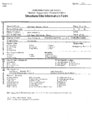
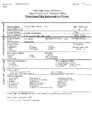
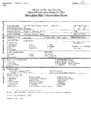
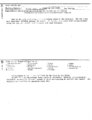
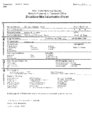
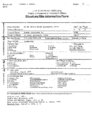
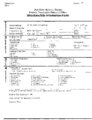
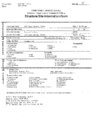
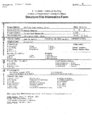
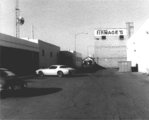
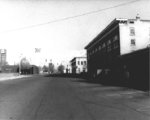
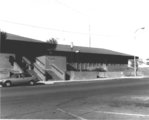
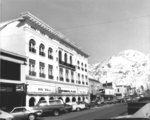
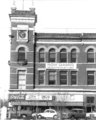
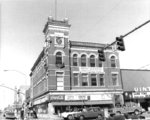
Show u <r ? Architect/Builder: Building Materials: brick Building Type/Style: commercial ------------------•---•-------------------------------•------------------------•-------- Description of physical appearance & significant architectural features: 5 This two-story brick, flat-roofed building has been altered, inside and out. y t 5 ? > O £ EC (Include additions, alterations, ancillary structures, and landscaping if applicable) • The outside stairway which led to a barber shop has been closed off. The facade has been remodeled in 1946 and 1955. The latest remodeling involved the addition of metal panels The front entrance has been reworked to eliminate a deeply recessed entry. Statement of Historical Significance: D a C D "3 Aboriginal Americans Agriculture Architecture The Arts Commerce D D a D a Communication Conservation Education Exploration/Settlement Industry D D a D D Military Mining Minority Groups Political Recreation D D D D Religion Science Socio-Humanitarian Transportation The building was built about 1890 when the buildings on either side were built. The 1890 Sanborn map lists the building as a bank and barber shop. A barber shop (Rollins and McLafferty) did occupy the rear, but a dry goods store, Hathenbimck and Co. (Fred W. C. Hathenbruck and George A. Richards) occuped the main area. By 1901 Hathenbruck and Co. had gone out of business and Robert R. Irvine and Sons occupied the building-until they moved into the" Academy Block (1902-1903). By 1903 Charles H. Wood had split with F. J. Booney (10 West Center) to form another dry goods store, Wood-Clifton Mercantile Co. (C. H. Wood president; W. R. butler, vicepresident?; L. A. Culbertson, secretary-treasurer) which occupied this building and #28. By 1911 Wood-Glifton had expanded to include #16 through #28. About 1926 Edwin Shriver bought this- building from Colonel Loose and opened a branch of W. F. Shriver and Sons, a company which had begun in Eureka. |