| OCR Text |
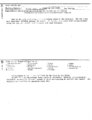
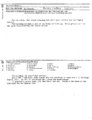
Show Form No. 10-300a (Hev 10-74) UNITED STATES DEPARTMENT OF THE INTERIOR FOR NPS USE ONLY NATIONAL PARK SERVICE NATIONAL REGISTER OF HISTORIC PLACES INVENTORY -- NOMINATION FORM RECgtVEO 1 0 SEP 1979 DATE ENTERED CONTINUATION SHEET_________________ITEM NUMBER 8______PAGE 2_______________________ HISTORY In March 1849, John S. Highbee led a company of about 150 persons, bringing their goods, cattle, equipment and provisions into the Utah Valley. They formed the nucleus of the tour of Provo City. The company had been sent by Brigham Young, President of the L.D.S. (Mormon) Church, and as part of an effort to secure a territory in which to establish a theocratic hegemony. In keeping with the ideals of Jeffersonion agrarianism which infused Mormon philosophy and practice, and the necessities of producing food and feed, Provo was surveyed (1850) as a plot one mile square surrounded by several acres of land put into eight lots.l This grid pattern was the "Plat of Zion" pattern used repeatedly by the Mormon settlers. Brigham Young had instructed the settlers, particularly the church and city officials, to establish their homes and farms in the town site. When many chose to build outside the city, those on the townsite petitioned Brigham Young (1852) to appoint church leader George A. Smith to move to Provo and regulate the affairs of Utah County. Smith did so, and with his encouragement the frontier town with its accompanying industrial and commercial enterprises began to emerge.2 The first merchant in Provo was Andrew J. Stewart who operated a general store out of his home on what is now 5th West. He later moved his business into a building he had erected on what is now Center Street - the street which would become the center of Provo's commercial district.3 By the end of 1852, Provo had several industries and businesses - a pottery for brown ware, two grist mills, one sash factory, three cabinet shops, one wooden bowl factory, three shoe shops, two tailor's shops, one meat market, two store houses, and two lime kilns. The Deseret Manufacturing Company organized by John Taylor had brought in sugar refining machinery from England and had obtained land for raising sugar beets. Provo also had two hotels.4 The hotels and most of the businesses were clustered at 5th West and Center Street. However, other businesses followed and established themselves east along Center Street. These two streets had been surveyed eight rods wide, with other streets five rods. As the demand for city lots increased, Plat 13 of Provo city was surveyed (1856) on the Mormon Tabernacle. It is obvious from the additional placement of the tithing yard diagonally across the street from the Tabernacle, that the city organizers planned for this east end of Center Street to be used for religious activities rather than commercial. Eventually even the county and city governmental buildings were located at this end. |