| OCR Text |
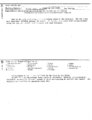
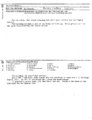
Show Form No. 1 0-300a (Kev 10-74} UNITED STATES DEPARTMENT OF THE INTERIOR NATIONAL PARK SERVICE ^ „ 10 NATIONAL REGISTER OF HISTORIC PLACES INVENTORY -- NOMINATION FORM CONTINUATION SHEET FOR NFS US€ GSUf ITEM NUMBER DATE ENTERED o PAGE o However, commercial establishments did not remain clustered on the west side, but rather pushed into the east - even including on the LDS blocks. The two streets - 5th West and University - were to become the focal point of the west-east commercial development in the City and the conflicts between the west and the east side merchants which would spill over into politics. The arrival in Utah of the United States Army (1857) in an effort to control the seemingly rebellious Mormons was a stimulation to the economy of Utah and particularly Provo. The several thousand Mormons from Salt Lake City significantly, the soldiers from Camp Floyd needed materials and supplies. When the army finally left the area in July of 1861, more than $4,000,000 worth of Government property was sold at a public auction for about $100,000.6 One of the merchants who had prospered because of the residence of the soldiers was Samuel S. Jones. He had begun his mercantile business in Camp Floyd, first by making adobe bricks for the fort and then in partnership with William Daley by selling vegetables to the men. After the army left, Jones who had bought some of the government property, established a business with a Jewish merchant Benjamin Buchman.7 This partnership and its later dissolution are symbolic of the sometimes cooperation, more often competition, between the Mormon and non-Mormon merchants in Provo. The competition intensified with the Mormon cooperative effort. In a 1867 church meeting, Brigham Young exhorted the Mormons to maintain economic self-sufficiency and to trade only among themselves. He soon afterward suggested cooperative merchandising. Late in 1868, the ever enterprising S. S. Jones organized a group of Mormon merchants including David John and A. O. Smoot, at the "Provo Co-Operative Institution." Utah's first cooperative store - the "West Co-Op" was established on Center Street in the building built by Andrew Stewart. S. S. Jones became the manager.8 A flood of "Gentile" business never did come into Provo as it did Ogden. Although Provo Canyon was examined as a possible route for the Pacific railroad, the "iron horse" found its way to Ogden rather than to Provo. After 1869, Ogden's population and commerce increased rapidly in comparison to Provo's. Provo, as the W.P.A. writers put it, "maintained its identity as a solid Mormon town."9 There were non-Mormons who came to Provo. Some were successful businessmen - such as the Bee brothers whose twin buildings which housed their harness and mercantile businesses still stand. The entire Bee family - Jane Bee, Jennie Bee Jones, Fred Bee, Cal Bee - was involved in Provo commerce. Earlier than the Bee family was the Freshwater family who began business in Provo in 1871 and continued successful through the 1920's. Samuel Schwab developed a clothing business which attracted customers from throughout the state. |