| OCR Text |
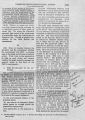
Show 'j &KL. i!M* lists'Institute v. /tES-- and "would be meaningless in terms of content." 22 The remainder of this section will focus on the Commission's first line of defense-the applicability of NEPA to technology research and development programs and the possibility of substituting an "environmental survey" for a NEPA statement. The following section will discuss the Commission's second argument- the timing of a NEPA statement on the overall ^*-pr*^ram.29 f The Commission takes an unnecessarily crabbed approach to NEPA in assuming that the "impact statement process was designed only^or^articular'facifitieslrather than for ana I Y"sis~df WclbveralLefTect s of broad agency programs. Indeed, q.uitetKe3:ontrary is true. "Individual actions that are related either geographically or as logical parts in a chain 28 Id. at 34. 29 Before turning to the merits. wr here consider two prc1imiriaFv"dcrenscs raised hv thfAEC relating to whether this case prr,:''r"c a jii&tktatlk r:'s<' or controversy and whethcr appellor" o^gaouatiofl V,-1C standing lu in.tiut'illn this action. In arguing that the /••^•^ js, nnnjiirlirirrbh;, tile AEC misch.m'f^rt?^ the issuer lit fui e i|y We arc not called upon to decide whether it would be wi;|er for Congress m npprnpri-ate funds forsome promising energy technology other than the LMFBKTC^'iUn'V •' :< SEES <&<*>- ment is prepared lor the overall program, Congress would hopefully coi'liiltlL'i the AECi7s au.iUhis in d e ciding whether tn iipprnpriTte mnn- fnn,-l<; fnr fhp pm....nm Put faff (j„flfi iyi>t mnkr l h» quest inn brfrtrr us political in nature. INor is it significant* that this case concerns an overall agency program rather than a single specific action. While it is true that the policies, programs and plnns f)[ gfl agency do "not give rise to a lusti-ciablc controversy save as they had fruition in action of aTTclinite and concrete character," Ashwander v. •TVA, 207 U.S. 288, 32-1 (1936), the AEC's IA1R}R rprtainly paSSd 'his requirement nf ji^it-cTamlitv. The AEC has already begun stcp-by-step impjementation of the program. 1 his pnWHTTrhas life/not only in the minds of AEC scientists, but though actions already toeing carTfM'ttut. Tradi-tional principles of ripeness dictate that judicial resources be reserved for problems which arc real and present, not hypothetical and remote. See 3 K. vis, ADMINISTRATIVE LAW TREATISE 116 (1958). The instant case is ripe under these principles since the issue tendered for review is whether an impact statement on the AEC's LMFBR program is presently required under NEPA. Thai the statement itself would consider the future effects of the program does not detract from the ripeness of this legal issue. The basic thrust of NEPA is to require consideration of environmental effects of proposed agency action long enough before that action is taken so that important agency decisions can meaningfully reflect environmental concerns. In the context of a long-range program such as is involved here, judicial review of compliance with NEPA is necessary at stages at which significant resources are being committed, lest the statute's basic purpose be thwarted. See text at pp. 26-27 infra. of contemplated actions may be more appropriately evaluated in a single, program statement. Such a statement also appears a^pjco4^ate-»>^oujiecjuon wifly*"*"* the development, of a new progrlimTTKat con-tempT^ tf-.s.„a num.bcr^of_su_bsequenT actions. • * * * [T]he program^taT^nerirha'r'a'Tium-ber of advantages. It provides an occasion for a more exhaustive consideration of effects and alternatives than would be practicable in a statement on an individual action. It ensures consideration of cumulative . impacts that might be slighted in a case-by-case analysis. And it avoids duplicative reconsideration of basic policy questions. * * * " 30 We ;hink it plain tfi,q al g a r n p poUjUn time there should be a detailed statement on the overall LMriiK program! T h e p rog ram With respect to appellant's standing to sue, we think appellant has alleged sufficient "injury in fact" to satisfy the standing test recently set out by the Supreme Court in Sierra Club v. Morton, 403 U.S. 727 [3 ERC 2039] (1972). As this court has already had occasion to note, the Sierra Club decision retained the principle of a modernized law of standing which embraces injury in fact to other than economic interests. See Environmental Defense Fund, Inc. v. EPA U.S.App.D.C , - n.l, 465 F.2d 528, 530-531 [4 ERC 1523] n.l (1972). Unlike the Sierra Club, which failed to allege that it or any of its members would be afTected „ in any of their activities by the federal action in question, see 405 U.S. at 735, the plaintiff organization in this case has clearly alleged and demonstrated that it and its members are adversely affected by the AEC's decision not to draft an impact statement on the overall LMFBR program. The activities of the plaintiff organization in this case, as described in a memorandum submitted to the District Court on the standing issue, include making available to the public scientific information relevant to important social issues and stimulating and informing public discussion of the scientific aspects of questions of public policy. The AEC's decision not to provide an impact statement on the overall LMFBR program has an adverse effect on these organizational activities by limiting appellant's ability to provide the public information on the LMFBR program. Appellant thus has alleged and shown more than the "mere 'interest in a prol>- lem' " held insufficient in Sierra Club. See 403 U.S. at 739. Any other approach to standing in the context of suits to ensure compliance with NEPA for long-range Government programs not yet resulting in injury to discrete economic, aesthetic or environmental interests would insulate administrative action from judicial review, prevent the public interest from being protected through the judicial process, and frustrate the policies Congress expressed in NEPA, a result clearly inconsistent with the Supreme Court's approach to standing. See 405 U.S. at 740. Accordingly, we believe the District Court was*t?»trect in finding that appellant has standing. f M Council on Environmental Quality (hereinafter cEQ), Memorandum lo Federal Agencies on Procedures for Improving Environmental Impact State- |