| OCR Text |
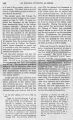
Show GREENE COUNTY PLANNING BOARD v. FEDERAL POWER COM'N 419 Cite as 455 F.2d 412 (1972) its final decision. Petitioners argue that the Commission must issue its statement prior to any formal hearings. PASNY, perhaps recognizing that the Commission's position is untenable, but nevertheless anxious to expedite the proceedings, proposes a third course of action. It urges that the Commission can draft its statement on the basis of the hearings, but to be circulated by it for comment before its final decision. It is clear to us that petitioners offer the correct interpretation. Section 101(a) of NEPA, 42 U.S.C.A. § 4331(a), declares that "it is the continuing policy of the Federal Government . . . to use all practicable means and measures . . . in a manner calculated to foster and promote the general welfare, to create and maintain conditions under which man and nature can exist in productive harmony, and fulfill the social, economic, and other requirements of present and future generations of Americans." To this end the government must "coordinate Federal plans, functions, programs, and resources. . . . " NEPA § 101(b), 42 U.S. CA. § 4331(b). As long as six years ago, this Court remanded a case to the Commission because, in granting a license for the construction of a similar pumped storage power project at Storm King Mountain on the Hudson River, it had failed to weigh the factors of "the conservation of natural resources, the maintenance of natural beauty, and the preservation of historic sites." 16 Scenic Hudson Preservation Conference v. Federal Power Commission [Scenic Hudson I ] , 354 F.2d 608, 614 (1965), cert, denied 16. The decision was based, upon Section 10(a) of the Federal Power Act, 16 U.S.C. § 803, which provides: All licenses issued under this Part shall be on the following conditions: (a) That the project adopted, including the maps, plans, and specifications, shall be such as in the judgment of the Commission will be best adapted to a comprehensive plan for improving or developing a waterway or waterways for the use or benefit of interstate or foreign commerce, for the improvement and utilization of waterpower development, and sub nom. Consolidated Edison Co. of New York v. Scenic Hudson Preservation Conference, 384 U.S. 941, 86 S.Ct. 1462, 16 L.Ed.2d 540 (1966). We commented there: "In this case, as in many others, the Commission has claimed to be the representative of the public interest. This role does not permit it to act as an umpire blandly calling balls and strikes for adversaries appearing before it; the right of the public must receive active and affirmative protection at the hands of the Commission." Id. at 620. But NEPA, which was a response to the urgent need for a similar approach in all federal agencies,1" went far beyond the requirement that the agency merely consider environmental factors and include those factors in the record subject to review by the courts. [2,3] In addition to the environmental impact statement, Section 102(2) requires the agency, inter alia, to: (A) utilize a systematic, interdisciplinary approach which will insure the integrated use of the natural and social sciences and the environmental design arts in planing and in decisionmaking Which may have an impact on man's environment; * * * * * * (D) study, develop, and describe appropriate alternatives to recommended courses of action in any proposal which involves unresolved conflicts concerning alternative uses of available resources; for other beneficial public uses, including recreational purposes; and if necessary in order to secure such plan the Commission shall have authority to require the modification of any project and of *he plans and specifications of the project works before approval. See aho Udall v. Federal Power Commission, 387 U.S. 428, 87 S.Ct. 1712, 18 L.Ed.2d 869 (1967). 17. See Hanks & Hanks, supra note 3, at 265-269. |