| OCR Text |
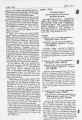
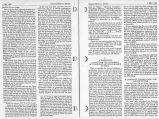
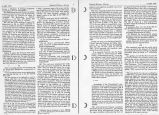
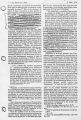
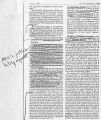
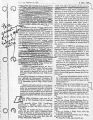
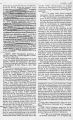
Show 418 455 FEDERAL REPORTER, 2d SERIES 1971). Although each appeal was denied sub silentio by operation of law,13 the Commission granted rehearings and by orders dated October 28 and 29, 1971, it formally denied the appeals. Petitioners ask us to review those orders. See Federal Power Act § 313, 16 U.S.C. § 8251. Before passing to the merits of petitioners' contentions, we note that the latest round of hearings commenced on November 9, 1971. Petitioners moved for a stay of these hearings in this Court, but the motion was denied on November 1. To date, the hearings have been concerned with cross-examination of PASNY and Commission witnesses. They are expected to continue for several months. In addition, the entire project, exclusive of the Gilboa-Leeds transmission line, is now more than 80% complete. 14 I. COMPLIANCE WITH NEPA A. Gilboa-Leeds Transmission Line Section 102(2) (C) of NEPA, as we stated at the outset, requires every federal agency to "include in every recommendation or report on proposals for . major Federal actions signify cantly affecting the quality of the human environment" a detailed environmental impact statement. Prior to making the statement, the agency must "consult with and obtain the comments of any Federal agency which has jurisdiction by law or special expertise with respect to any environmental impact involved." The detailed statement, however, "must accompany the proposal through the existing agency review processes . . . . ** M (Emphasis added.) [1] It is conceded that authorization of the Gilboa-Leeds line, an integral part of the Blenheim-Gilboa Project, would constitute a major federal action. The parties, however, are in vigorous disagreement over when the Commission must make its impact statement. The Commission argues that PASNY's statement, reviewed as to form by the Commission and circulated by it, suffices for the purposes of Section 102(2) (C) and that the Commission is not required to make its own statement until it files 13. Section 1.28(c) of the Commission's rules provides in part: (c) Commission action. Unless the Commission acts upon questions referred by presiding officers to the Commission for determination or upon appeals taken to the Commission from rulings of presiding officers within thirty days after referral or filing of the appeal, whichever is later, such referrals or appeals shall be deemed to have been denied. 14. We are told that more than 75% of the estimated $160,000,000 total cost has been spent or committed. 15. Section 102(2) (C) provides in full: Sec. 102. The Congress authorizes and directs that, to the fullest extent possible: . . . (2) all agencies of the Federal Government shall- * * * * * (C) include in every recommendation or report on proposals for legislation and other major Federal actions significantly affecting the quality of the human environment, a detailed statement by the responsible official on- (i) the environmental impact of the proposed action, (ii) any adverse environmental effects which cannot be avoided should the proposal be implemented, (iii) alternatives to the proposed action, (iv) the relationship between local short-term uses of man's environment and the maintenance and enhancement of long-term productivity, and (v) any irreversible and irretrievable commitments of resources which would be involved in the proposed action should it be implemented. Prior to making any detailed statement, the responsible Federal official shall consult with and obtain the comments of any Federal agency which has jurisdiction by law or special expertise with respect to any environmental impact involved. Copies of such statement and the comments and views of the appropriate Federal, State, and local agencies, which are authorized to develop and enforce environmental standards, shall be made available to the President, the Council on Environmental Quality and to the public as provided by section 552 of title 5, United States Code, and shall accompany the proposal through the existing agency review processes. |