| OCR Text |
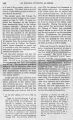
Show 401 U.S. 420 CITIZENS TO PRESERVE Cite as 01 S Housing Authority's refusal to state the reasons for her eviction and to afford her a hearing at which she could contest the sufficiency of those reasons." 393 U.S., at 272, 89 S.Ct., at 520. While the case was pending in this Court, the Department of Housing and Urban Development issued regulations requiring Housing Authority officials to inform tenants of the reasons for an eviction and to give a tenant the opportunity to reply. The case was then remanded to the state courts to determine if the HUD regulations were applicable to that case. The state court held them not to be applicable and this t,l9 Court reversed on thejground that the general rule is "that an appellate court must apply the law in effect at the time it renders its decision." 393 U.S., at 281, 89 S.Ct, at 526. While we do not question that DOT Order 5610.1 constitutes the law in effect at the time of our decision, we do not believe that Thorpe compels us to remand for the Secretary to make formal findings.33 Here, unlike the situation in Thorpe, there has been a change in circumstances-additional right-of-way has been cleared and the 26-acre right-of- way inside Overton Park has been purchased by the State. Moreover, there is an administrative record that allows the full, prompt review of the Secretary's action that is sought without additional delay wh'ich would result from having a remand to the Secretary. [12] That administrative record is not, however, before us. The lower courts based their review on the litigation affidavits that were presented. These affidavits were merely "post hoc" rationalizations, Burlington Truck Lines v. United States, 371 U.S. 156, 168-169, 33. Even if formal findings by the Secretary were mandatory, the proper course would be to remand the case to the District Court directing that court to order the Secretary to make formal findings. See R. Robertson & F. Kirkham, Jurisdiction of the Supreme Court of the United States § 446, p. 929 (R. Wolfson & P. Kurland ed. 1951). Of course, the 91 S.Ct.-52V4 OVERTON PARK, INC. v. VOLPE 825 Ct. 814 (10731) 83 S.Ct. 239, 245-246, 9 L.Ed.2d 207 (1962), which have traditionally been found to be an inadequate basis for review. Burlington Truck Lines v. United States, supra; SEC v. Chenery Corp., 318 U.S. 80, 87, 63 S.Ct. 454, 459, 87 L.Ed. 626 (1943). And they clearly do not constitute the "whole record" compiled by the agency: the basis for review required by § 706 of the Administrative Procedure Act. See n. 30, supra. j T h u s it is necessary to remand this {420 case to the District Court for plenary review of the Secretary's decision. That review is to be based on the full administrative record that was before the Secretary at the time he made his decision.34 But since the bare record may not disclose the factors that'were considered or the Secretary's construction of the evidence it may be necessary for the District Court to require some explanation in order to determine if the Secretary acted within the scope of his authority and if the Secretary's action was justifiable under the applicable standard. [13,14] The court may require the administrative officials who participated in the decision to give testimony explaining their action. Of course, such inquiry into the mental processes of administrative decisionmakers is usually to be avoided. United States v. Morgan, 313 U.S. 409, 422, 61 S.Ct. 999, 1004-1005, 85 L.Ed. 1429 (1941). And where there are administrative findings that were made at the same time as the decision, as was the case in Morgan, there must be a strong showing of bad faith or improper behavior before such inquiry may be made. But here there are no such formal findings and it may be that the only way there can be effective judicial re- District Court is not prohibited from remanding the case to the Secretary. See infra, at 825. 34. The Solicitor General now urges that in order to avoid additional delay the proper course is to remand the case to the District Court for review of the full administrative record. |