| OCR Text |
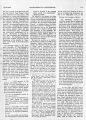
Show CALVERT CLIFFS' COORD. COM Cite as 449 F NEPA's principal sponsor, stated that "[n]o agency will [now] be able to maintain that it has no mandate or no requirement to consider the environmental consequences of its actions." 6 He characterized the requirements of Section 102 as "action-forcing" and stated that "[ojtherwise, these lofty declarations [in Section 101] are nothing more than that." 7 [1,2] The sort of consideration of environmental values which NEPA compels is clarified in Section 102(2) (A) and (B). In general, all agencies must use a "systematic, interdisciplinary approach" to environmental planning and evaluation "in decisionmaking which may have an impact on man's environment." In order to include all possible v. UNITED STATES A. E. COITN 1113 2d 1109 (1071) environmental factors in the decisional equation, agencies must "identify and develop methods and procedures * * ** which will insure that presently unquan-\ tified environmental amenities and val- 1 ues may be given appropriate consideration in decisionmaking along with economic and technical considerations."8 "Environmental amenities" will often be I in conflict with "economic and technical considerations." To "consider" the former "along with" the latter must involve a balancing process. In some instances environmental costs may outweigh economic and technical benefits and in other instances they may not. But NEPA mandates a rather finely tuned and "systematic" balancing analysis in each instance. 9 ment of consideration is clearly implicit in the substantive mandate of § 101, in the requirement of § 102(1) that all laws and regulations be "interpreted and administered" in accord with that mandate, and in the other specific procedural meas-sures compelled by § 102(2). The only circuit to interpret NEPA to date has said that "[t]his Act essentially states that every federal agency shall consider ecological far-tors when dealing with activities which may have an impact on man's environment." Zabel v. Tabb, 5 Cir., 430 F.2d 199, 211 (1970). Thus a purely mechanical compliance with the particular measures required in § 102 (2) (C) & (D) will not satisfy the Act if they do not amount to full good faith consideration of the environment. Sec text at page 1116 infra. The requirements of § 102(2) must not be read so narrowly as to erase the general import of §§ 101. 102(1) and 102(2) (A) & (B). On April 23, 1971, the Council on Environmental Quality-established by NEPA-issued guidelines for federal agencies on compliance with the Act. 36 Fed. Reg. 7723 (April 23, 1971). The Council stated that "[t]he objective of section 102(2) (C) of the Act and of these guidelines is to build into the agency decision making process an appropriate and careful consideration of the environmental aspects of proposed action * * *." Id. at 7724. Hearings on S. 1075, S. 237 ami S. 1752 Before Senate Committee on Interior and Insular Affairs, 91st Cong., 1st Sess. 206 (19G9). Just before the Senate finally approved NEPA, Senator Jackson said 449 F.2d-70V2 on the floor that the Act "directs all agencies to assure consideration of the environmental impact of their actions in decisionmaking." 115 Cong.Rec. (Part 30) 40416 (1969). 7. Hearings on S. 1075, supra Note 6, at 116. Again, the Senator reemphasized his point on the floor of the Senate, saying: "To insure that the policies and goals defined in tliis act are infused into the ongoing programs and actions of the Federal Government, the act also established some important 'action-forcing' procedures." 115 Cong.Rec. (Part 30) at 40416. The Senate Committee on Interior and Insular Affairs Committee Report on NEPA also stressed the importance of the "action-forcing" provisions which require full and rigorous consideration of environmental values as an integral part of agency decision making. S.Rep.No.91-296, 91st Cong., 1st Sess. (1969). 8. The word "appropriate" in § 102(2) (B) cannot be interpreted to blunt the thrust of the whole Act or to give agencies broad discretion to downplay environmental factors in their decision making processes. The Act requires consideration "appropriate" to the problem of protecting our threatened environment, not consideration "appropriate" to the whims, habits or other particular concerns of federal agencies. See Note 5 supra. 9. Senator Jackson specifically recognized the requirement of a balancing judgment. He said on the floor of the Senate: "Subsection 102(b) requires the development of procedures designed to insure that all relevant environmental values and |