| Title |
Sierra Club v. Gilbert Stamm and other legal cases involving environmental impact statements |
| Description |
Documents about Sierra Club, et al. v. Gilbert Stamm, et al. and other court cases involving the NEPA and environmental impact statements; from the The Dorothy Harvey papers (1902-2005), a collection of materials focusing on the Central Utah Project (CUP), a water resource development program to use Utah's alloted share of the Colorado River. Includes correspondence, Harvey's writing drafts and notes for an unpublished book on the CUP, federal documents, project litigation materials, subject files, news clippings, newsletters, programs, brochures, and maps |
| Subject |
Environmental impact analysis; Environmental impact statements--Law and legislation; Central Utah Project. Bonneville Unit; Colorado River Storage Project (U.S.); Water resources development--Environmental aspects--Utah; Strawberry Aqueduct; Dams--Environmental aspects--Utah; Water-supply--Utah--Salt Lake County; Helium--Law and legislation--United States; National Environmental Policy Act; Nuclear energy--Environmental aspects--United States; Nuclear energy--Law and legislation--United States--Cases; Highway planning--Environmental aspects--United States |
| Additional Information |
Includes: Sierra Club, et al. v. Gilbert Stamm, et al.; Excerpt from Environmental Law Reporter; Documents concerning National Helium v. Morton including: "Full Text of Decisions of the Federal and State Courts Involving Environmental Law: National Helium v. Morton"; "Bureau of National Affairs Environment Reporter December 7, 1973: National Helium v. Morton"; Calvert Cliffs' Coordinating Committee, Inc., et al., vs. United States Atomic Energy Commission; Greene County Planning Board, Petitioner, v. Federal Power Commission, Respondent; Scientists' Institute for Public Information, Inc., Appellant, v. Atomic Energy Commission et al.; Citizens to Preserve Overton Park, Inc., et al, v. John A. Volpe, Secretary, Department of Transportation, et al. |
| Spatial Coverage |
Bonneville Basin (Utah); Uinta Basin (Utah and Colo.); Currant Creek Dam (Utah); Strawberry Reservoir (Utah); Rock Creek (Utah); Uintah and Ouray Indian Reservation (Utah); Upper Stillwater Reservoir (Utah); Salt Lake City (Utah); Salt Lake County (Utah); Utah County (Utah); Utah Lake (Utah); Provo River (Utah) |
| Collection Number and Name |
Accn2232 Bx 118 Fd 6; Dorothy Harvey papers |
| Rights Management |
Digital Image © 2010 University of Utah. All Rights Reserved. |
| Holding Institution |
J. Willard Marriott Library, University of Utah |
| Date |
1971; 1972; 1973 |
| Digitization Specifications |
Original scanned on Epson Expression 10000 XL and saved as 400 ppi TIFF. Display image generated in CONTENTdm |
| Publisher |
Digitized by J. Willard Marriott Library, University of Utah |
| Type |
Text |
| ARK |
ark:/87278/s6vq31nk |
| Setname |
wwdl_neh |
| ID |
1156041 |
| Reference URL |
https://collections.lib.utah.edu/ark:/87278/s6vq31nk |
| Title |
Page 54 |
| Setname |
wwdl_neh |
| ID |
1155952 |
| OCR Text |
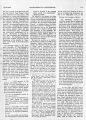
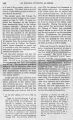
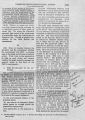
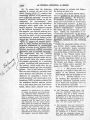
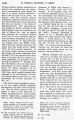
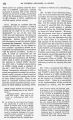
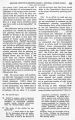
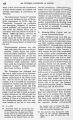
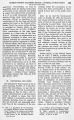
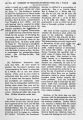
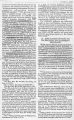
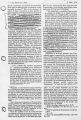
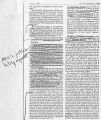
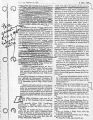
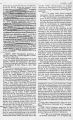
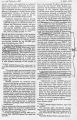
Show 1128 449 FEDERAL REPORTER, 2d SERIES f n^l ^ L f ^ tion of national policy militating against delay in construction of nuclear power facilities. [11] The Commission relies upon the flexible NEPA mandate to "use all practicable means consistent with other essential considerations of national policy." As we have previously pointed out, however, that mandate applies only to the substantive guidelines set forth in Section 101 of the Act. See page 1114 upra. The procedural duties, the duties to give full consideration to environmental protection, are subject to a much more strict standard of compliance. By now, the applicable principle should be absolutely clear. NEPA requires that an agency must-to the fullest extent possible under its other statutory obligations- consider alternatives to its actions which would reduce environmental -damage. T/faat principle establishes that consideration of environmental matters. must be more than a pro forma .ritual-jCkarJx it is pointless to "consider" environmental costs without also seriously considering action to avoid them. Such_ a full exercise of substantive discretion is required at every important, appropriate and nonduplicative stage of an agency's proceedings. See text at page 1114 supra. The special importance of the pre-op-erating license stage is not difficult to fathom. In cases where environmental costs were not considered in granting a construction permit, it is very likely that the planned facility will include some features which do significant damage to the environment and which could not have survived a rigorous balancing of costs and benefits. At the later operating license proceedings, this environmental damage will have to be fully considered. But by that time the situation will have changed radically. Once a facility has been completely constructed, the economic cost of any alteration may be very great. JjcuJthe^Janguage qf. NEPA, there is likely to be an "irreversible and irretrievable commitment of re^ sou fee s >" wh i ch will inevitably restrict the Commission's options. Either the licensee will have to undergo a major expense in making alterations in a completed facility or the environmental harm will have to be tolerated. It is all too probable that the latter result would come to pass. By refusing to consider requirement of alterations until construction is completed, the Commission may effectively foreclose the environmental protection desired by Congress. It may also foreclose rigorous consideration of environmental factors at the eventual operating license proceedings. If "irreversible and irretrievable commitment[s] of resources" have already been made, the license hearing (and any public intervention therein) may become a hollow exercise. This hardly amounts to consideration of environmental values "to the fullest extent possible." A full NEPA consideration of alterations in the original plans of a facility, then, is both important and appropriate well before the operating license proceedings. It is not duplicative if environ mental issues were not considered in granting the construction permit. And it need not be duplicated, absent new information or new developments, at the operating license stage. In order that the pre-operating license review be as effective as possible, the Commission should consider very seriously the requirement of a temporary halt in construction pending its review and the "backfitting" of technological innovations. For no action which might minimize environmental damage may be dismissed out of hand. Of course, final operation of the facility may be delay. : thereby. But some delay is inhered whenever the NEPA consideration i* conducted-whether before or at the incense proceedings. It is far more consistent with the purposes of the Act t delay operation at a stage where real environmental protection may conv about than at a stage where correct iv*1' action may be so costly as to be im; " sible. [12] Thus we conclude that the C mission must go farther than it ha • |
| Reference URL |
https://collections.lib.utah.edu/ark:/87278/s6vq31nk/1155952 |