| OCR Text |
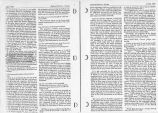
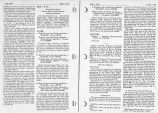
Show SCIENTISTS' INST. FOR PUB. INFO., INC. v. ATOMIC ENERGY COM'N 1 0 95 Cite ns 481 K.2d 1079 (1073) 0f the environment. Similarly, the regulations of the Environmental Protection Agency require that agency to issue a negative declaration when an environmental assessment indicates there will be no significant impact, accompanied by an appraisal documenting the agency's reasons for concluding that no statement is required.65 A statement of reasons will serve two functions. It will ensure that the agency has given adequate consideration to the problem and that it understood the statutory standard. In addition, it will provide a focal point for judicial review of the agency's decision, giving the court the benefit of the agency's expertise.68 In the present case the Commission has not established any procedure to evaluate its ongoing LMFBR program under NEPA. The Commission's basic position throughout this case seems to be that NEPA does not apply at all to overall research and development programs, but rather only to specific facilities. To the extent the Commission's decision not to write a statement for its program represents in- 65. Id. at 1699, amending 40 C.F.R. § 6.25 (a) (1972). 66. See Permian Basin Area Rate Cases, 390 U.S. 747, 792, 88 S.Ct. 1344, 20 L.Ed. 2d 312 (1968) ; Citizens x\ssn of Georgetown, Inc. v. Zoning Comm'n of D. C, supra note 61, 155 U.S.App.D.C. at 239, 477 F.2d at 408; Environmental Defense Fund, Inc. v. Ruckelshaus, supra note 62, 142 U.S.APP.D.C. at 88, 439 F.2d at 598. 67. See Citizens to Preserve Overton Park, Inc. v. Volpe, 401 U.S. 402, 419, 91 S.Ct. 814, 28 L.Ed.2d 136 (1971) ; Burlington Truck Lines v. United States, 371 U.S. 156, 168-169, 83 S.Ct. 239, 9 L.Ed.2d 207 (1962). 68. The decision whether the time is ripe for a NEPA statement on an overall research and development program is a mixed question of law and of fact. It concerns a question of law as to interpretation of the statutory phrase "major Federal action significantly affecting the quality of the human environment" as it pertains to technology research and development programs. As indicated in text, we interpret the statute to provide for a balancing approach which takes into ac-stead a decision that the time is not yet ripe for such a statement, the Commission has not given reasons for its decision. Nor are the post hoc rationalizations of Commission counsel of much value as a substitute.67 As indicated earlier, the reasons given in this case are ambiguous and inconsistent. And even if they were not, we would have no way of knowing whether they reflect the reasons actually relied upon by the Commission. We must, therefore, resort to other material in the record to determine whether the Commission properly decided not to draft a statement for the overall program at the present time. Fortunately a substantial record was made before the District Court, consisting in large part of analyses and reports completed by the Commission itself. Our examination of this record leads us to conclude that the Commission could have no rational basis for deciding that the time is not yet ripe for drafting an impact statement on the overall LMFBR program.68 Consideration of each of the facts set out in our balancing test point count the Act's policies in favor of information which is both meaningful and timely. In addition, the decision involves a question of fact as to application of that balancing test to the realities of a specific program at a specific time. With respect to judicial review of such mixed questions of law and fact, the Supreme Court has authorized a practical standard of review, the "rational basis" test, under which the court will reverse the agency's decision if it has no warrant in the record and no reasonable basis in law. NLRB v. Hearst Publications, Inc., 322 U.S. 111, 131, 64 S.Ct. S51, 88 L.Ed. 1170 (1944); Hanly v. Kleindienst, 2 Cir., 471 F.2d 823, 829 (1972). In reviewing an agency decision that no impact statement was required for certain proposed federal action, the 2nd Circuit has recently rejected this approach in favor of the "arbitrary, capricious, an abuse of discretion, or otherwise not in accordance with law" standard of the Administrative Procedure Act, see 5 U.S.C. § 706(2) (A) (1970), as that test was interpreted by the Supreme Court in Citizens to Preserve Overton Park, Inc. |