| OCR Text |
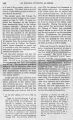
Show 420 455 FEDERAL REPORTER, 2d SERIES (E) recognize the worldwide and long-range character of environmental problems . . . . We view this section as did the District of Columbia Circuit. It is a mandate to consider environmental values "at every distinctive and comprehensive stage of the [agency's] process." The primary and nondelegable responsibility for fulfilling that function lies with the Commission. Calbert Cliffs' Coordinating Committee, Inc. v. United States Atomic Energy Commission, 449 F.2d 1109, 1119 (D.C. Cir. 1971) (holding that rules of the AEC which did not require a detailed statement in an uncontested licensing proceeding did not comply with Section 102(2) (C)). [4] The Federal Power Commission has abdicated a significant part of its responsibility by substituting the statement of PASNY for its own. The Commission appears to be content to collate the comments of other federal agencies, its own staff and the intervenors and once again to act as an umpire.18 The danger of this procedure, and one obvious shortcoming, is the potential, if not likelihood, that the applicant's statement will be based upon self-serving assumptions. 19 In fact, PASNY's statement begins: "Neither the construction nor the operation of the Gilboa-Leeds transmis- 18. The Commission did not face squarely the issue of compliance with NEPA in its orders. In upholding the Presiding Examiner's refusal to delay the hearings until the Commission had prepared its statement, the Commission said : they [Durham and Greene County] simply ask the Commission to reconsider that which the Presiding Examiner found to be not in the public interest. For the reasons given in connection with the preceding appeal [the Presiding Examiner has broad discretion over hearing procedures], reconsideration of such procedural matter will be denied . . . . 19. Cf. Scenic Hudson I, 354 F.2d at 619: "self-serving general statements by officials of Consolidated Edison . . . ." 20. See, e. g., Association of Data Processing Service Organizations v. Camp, 397 sion line will have any significant adverse impact on the environment." But the Gilboa-Leeds line, if constructed as proposed, will cut a swath approximately 35 miles long and 150 feet wide across the face of Greene and Schoharie Counties. It is small consolation that the line will not scar either existing historical sites or designated park land. [5] Moreover, although decisions like Scenic Hudson I have greatly expanded the concept of standing to challenge administrative action,20 intervenors generally have limited resources, both in terms of money and technical expertise, and thus may not be able to provide an effective analysis of environmental factors. 21 It was in part for this reason that Congress has compelled agencies to seek the aid of all available expertise and formulate their own position early in the review process. The Commission argues, however, that written testimony of its staff demonstrates that the Commission has not left the applicant and the intervenors to develop the record. It insists that its staff has undertaken field research in an effort to investigate alternatives proposed by PASNY and also any additional feasible alternatives. It is clear to us that this testimony cannot replace a single coherent and compre- , hensive environmental analysis, which is ; U.S. 150, 153, 90 S.Ct. 827, 25 L.Ed.2d 184 (1970) ; Citizens Committee for Hudson Valley v. Volpe, 425 F.2d 97 (2d Cir.), cert, denied, 400 U.S. 949, 91 S.Ct. 237, 27 L.Ed.2d 256 (1970). -See generally Hanks & Hanks, supra note 3, at 231-244; Peterson; supra note 3, at 50047-^8. 21. See Calvert Cliffs', 449 F.2d at 1118- 1119 ("It is, moreover, unrealistic to assume that there will always be an inter-venor with the information, energy and money required to challenge a staff recommendation which ignores environmental costs.") ; Gellhorn, Public Participation in Administrative Hearings, Report Prepared for the Committee on Agency Organization and Procedure of the Administrative Conference of the United States 29-37 (October 29, 1971). |