| OCR Text |
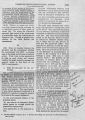
Show 822 91 SUPREME COURT REPORTER 401 U.S. 412 |4i8 of parkland was to be given paraynount importance. The few green havens that are public parks were not to be lost unless there were truly unusual factors present in a particular case or the cost or community disruption resulting from alternative routes reached extraordinary magnitudes. If the statutes are to have i any meaning, the Secretary cannot ap- | prove the destruction of parkland unless 1 he finds that alternative routes present unique problems. Plainly, there is "law to apply" and thus the exemption for action "committed to agency discretion" is inapplicable. But the existence of judicial review is only the start: the standard for review must also be determined. For that we must look to § 706 of the Administrative Procedure Act, 5 U.S.C. § 706 (1964 ed., Supp. V), which provides that a "reviewing court shall * * * hold unlawful and set aside agency action, findings, and conclusions found" not to meet six sep- [414 arate standards.30 In all cases \agency action must be set aside if the action was "arbitrary, capricious, an abuse of discretion, or otherwise not in accordance with law" or if the action failed to meet statutory, procedural, or constitutional requirements. 5 U.S.C. §§ 706(2) (A), (B), (C), (D) (1964 ed., Supp. V). In certain narrow, specifically limited' situations, the agency action is to be set aside if the action was not supported by "substantial evidence." And in other equally narrow circumstances the reviewing court is to engage in a de novo review of the action and set it aside if it was "unwarranted by the facts." 5 U.S.C §§706(2) (E), (F) (1964 ed., Supp. V)'. Petitioners argue that the Secretary's approval of the construction of 1-40 through Overton Park is subject to one or the other of these latter two standards of limited applicability. First, they contend that the "substantial evidence" standard of § 706(2) (E) must be applied. In the alternative, they claim that § 706(2) (F) applies and that there must be a de novo review to determine if the Secretary's action was "unwarranted by the facts." Neither of these standards is, however, applicable. [6, 7] Review under the substantial-evidence test is authorized only when the agency action is taken pursuant to a rulemaking provision of the Administrative Procedure Act itself, 5 U.S.C. § 553 (1964 ed., Supp. V), or when the agency Cong., 2d Sess.. 12. Statements by proponents of the statutes as well as the Senate committee report on § 4(f) indicate, however, that the Secretary was to have limited authority. See, c. g., 114 ' Cong.Rec. 24033-24037; S.Rep.Xo.1659, S9th Cong., 2d Sess., 22. See also II.R. Conf.Rep. Xo. 2236. S9th Cong.. 2d Sess., 25. Because of this ambiguity it is clear that we must look primarily to the statutes themselves to find the legislative intent. 30. ""To the extent necessary to decision and when presented, the reviewing court shall decide all relevant questions of law, interpret constitutional and statutory provisions, and determine the meaning or applicability of the terms of an ageny action. The reviewing court shall- "(1) compel agency action unlawfully withheld or unreasonably delayed; and "(2) hold unlawful and set aside agency action, findings, and conclusions found to be- "(A) arbitrary, capricious, an abuse of discretion, or otherwise not in accordance with law ; "(B) contrary to constitutional right, power, privilege, or immunity; "(C) in excess of statutory jurisdiction, authority, or limitations, or short of statutory right; "(D) without observance of procedure required by law; "(E) unsupported by substantial evidence in a case subject to sections 556 and 557 of this title or otherwise reviewed on the record of an agency hearing provided by statute; or "(F) unwarranted by the facts to the extent that the facts are subject to trial de novo by the reviewing court. "In making the foregoing determinations, the court shall review the whole record or those parts of it cited by a party, and due account shall be taken of the rule of prejudicial error." 5 U.S.C. § 706 (1964 ed., Supp. V). |