| OCR Text |
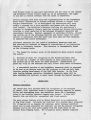
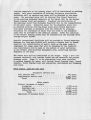
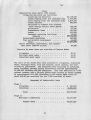
Show • clustering around $20 per acre-foot. The higher values are generally for irrigation of higher-valued crops and for irrigation in the most arid areas or in areas with longer growing seasons. In the humid East, relatively small amounts of irrigation water are used, but it is mostly applied to high value crops and has values in about the same range. Estimation of the value of water for municipal and domestic uses must proceed without benefit of the techniques that can be employed for valuing water for a production use. Nevertheless, there have been several studies of household demand. In general, they support estimated values of around $100 per acre-foot lor in-house uses and about $66 in the West and $16 in the East for lawn and garden irrigation. .." "... Withdrawals of water by industry account for more than one-half of all withdrawals. Most of this water is used for disposing of heat or other waste, and returned to the stream. Very little water is actually consumed by industry, therefore, use of water by industry is for cooling (principally in steam electric generating plants). Most of the remaining industrial uses are concentrated in five industries: Food products, pulp and paper, chemicals, petroleum and primary metals..." 14 "...The value of water in alternative uses provides only a part of the information needed for decisions about water development and allocation. Because o£ the combinations o£ uses and reuses of water that are possible within a water system, it is equally as important to know how uses combine and interact in the total system. The possibility of using water more than once, either simultaneously or in sequence, means that the total value gained from use of a given unit of water may be several times greater than the value in any single use. Most uses of water do not permanently remove the water from the system. Typically water is used in place as in many recreational, navigational, and hydropower uses, or diverted, used for a time, and then returned to the stream as is the case for most water used by cities and industries. Oily in a few instances, such as irrigation of farm land or discharge of sewage effluent to the ocean, is a large fraction of the water consumed and not returned to the system. The return of water to the system after use raises all sorts of possibilities for getting additional value from the water in another use, at another time and place in the system. Wise use of this natural recycling system is one of two key principles in getting the most value from the Nation's water resources. The other principle is to give preference to high-valued uses where other factors, including system effects, are equal." 14 The Sevier River Basin Report prepared by the U.S.D.A. contains the following information. If the overall efficiency of diverted water were increased about 10%, the present deficit of nearly 78,000 acre-feet on irrigated land would be non-existent. The benefits and costs of this project were evaluated at a discount rate of 3.1%. A minimum rate today would be 7%. The total cost of the Bonneville Unit shown in the 1964 Definite Plan Report was about $324,000,000c Today the costs have risen to about $500,000,000. It |