| OCR Text |
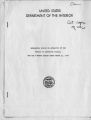
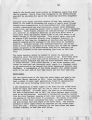
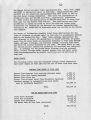
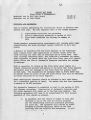
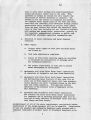
Show Critical Analysis Bonneville Unit, Central Utah Project a Bureau of Reclamation Water Development Project ABSTRACT This report analyzes the Bonneville Unit of the Central Utah Project. The following conclusions are supported: 1. Based upon current and projected demands for water, there is no need to import water from the Uinta Basin to the Bonneville Basin. 2. Even if a "need" could be demonstrated, the Bonneville Unit would add only 5% to the current supply of water, providing only a short-term, stop-gap solution. 3. The estimated costs of over $500,000,000 for the Bonneville Unit cannot be justified by anticipated economic benefits from the project. 4. It makes little sense to spend over $500,000,000 or public funds to construct a project to produce surplus crops for which hundreds of millions of dollars of subsidies are currently being paid from public fundsc So The Bonneville Unit will be extremely damaging to the natural environment by destroying trout fisheries in more than 193 miles of high quality streams, eliminating thousands of acres of big game and other wildlife habitat, destroying esthetic and recreational values of Rock Creek Canyon and Utah Lake, 6, The Bonneville Unit will further concentrate population along the aiready congested and polluted Wasatch Front, further degrading the quality of life in the urban areas of Utah. 7c The Bonneville Unit will seriously increase the salinity of the Colorado River, resulting in annual costs of $500,000 to the public and, 8= A variety cf alternatives are,available to meet projected demands for municipal and industrial water for the Wasatch Front. These alternatives would use water already in tne Bonneville Basin, would be much less expensive than the Bonneville Unit and would have considerably less environmental impact. The purpose of this paper is to provide a comprehensive analysis of the Bonneville Unit of the Central Utah Project in order to inform citizens of the basic needs for the project, the economic factors associated with it, and the environmental impacts which will result from its construction and operation. Thus, the major question to be raised is whether or not the economic and social returns from the project justify a large expenditure of public funds and significant environmental consequences. In order to provide a meaningful look at the Bonneville Unit, a number of sources have been used and the data are arranged in several major sections. They are, in order, Present Status of the Project, Water Supply and Demand; Irrigation Investment and Return; Munidipal and Industrial Investment and Return; Environmental Investment and Return, and Alternatives to the Project, |