| OCR Text |
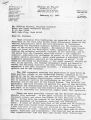
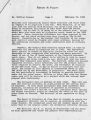
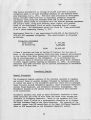
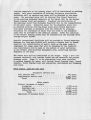
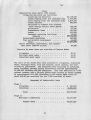
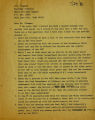
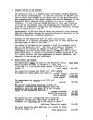
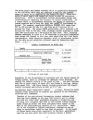
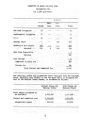
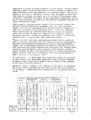
Show 9 river another 378,000 acre-feet./ Ones these supplies are depleted. assuming continued growth, an absolute limit of 123,000 A.F. o£ Colorado' River water remain available for future use,. y of Colorado River water' status taken directly from the Interim. Report on State Water Plan is shown on the following page0 That 123s000 A.F. amounts to an additional 6-year supply for in-or ex-basin use. Assuming full development o£ in-basin supplies, future shortages can be forestalled for about 20-25 years by Colorado River water importation„ Subsequently water will again be a limiting factor. Additional water could become available from the Columbia River and the Fraser River Basin in the Artie via diversion to the Bonneville Basin- Attempts h£ve already been made to obtain Columbia River Basin water but Senator Jackson has forestalled such planning through 1978. Subsequently this matter could again be pursued. If one jf these methods is considered practical and is endorsed by the State, then the need for the CUP would require further review0 The only alternatives to the above diversion are naturally-occurring changes in life styles and water use9 establishment of growth limitation in i^ie Wasatch Front or development of stop-gap measures such as idie use of Colorado River water until real shortages force a permanent solution. Ill IRRIGATION INVESTMENT AND RETURN Background information: ""There were about 1,110,000 Ta^£m\d~m^E^lTli->, as of 1964. Of this amount about 434s000,( we-re cropland and the remainder pasture About 37,000,000 acres of cropland ox 81 were irrigated0* Reclamation projects have irrigated about 10,000,000 or 1/3 of the total/* To accomplish this the Bureau of Reclamation has spent $8,000,000,000 or $800 per acre. They propose to spend in excess of a total of $12,,000,000,000 on presently fined projects and increase irrigated acetr^asze to 24,000,000 acres."4 Statements by experts from the U.S.D.A National Advisor/ council for the Water Resources Council suggest rather clearly that there is no need for more farmland now or in the future. According to a study by the U,S,D,A Agriculture Stabilization and Conservation Service, since 1950 crop yields have almost doubled and are still climbing0 The National Advisory Commission stated, ''Policies should be tied less closely to land since land is a less limiting factor in food and fiber production 80.M They concluded that, "U,So agricultural sur-plusses will be even greater in 1980 than at present*"// An U.S.D.Ao economist on the Water Resources Task Force stated, "We would ha^e a hard time defending the need for more irrigated land"0 "About 1/3 or 160,000/300 acres o£ cropland in the U.S., are presently idle, Of the 160,000,000 acres of unused land about 50,000,000 acres lie idle as a result of Government expenditures to take farmland out of productiono" Jl In terms of Bureau of Reclamation irrigated cropland, about 251 supports cereals- barley, soybean, corn, wheat. The U.S.DoA. treats these as surplus crops and the Commercial Credit Corporation pays $50,000,000,annually to provide price supportse Twenty-five percent amounts to 2,500,000 acres of the 10,000,000 acres irrigated by the Bureau of Reclamation using public funds. Since 1944 the Bureau of A |