| OCR Text |
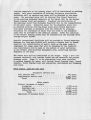
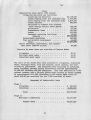
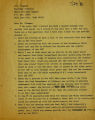
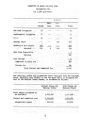
Show Reclamation has provided funds that have added the following to the supply of surplus crops: 246,000 acres of com 152,000 acres of wheat 143,000 acres of barley Quantities of these crops have decreased elsewhere in the country, About 16% of all Bureau of Reclamation irrigated land is devoted to sugar beets, cotton and beans. These crops are all supported by U.S. DoAn surplus programs. Economists estimate cotton price supports and credit programs for cotton grown with Bureau o£ Reclamation water cost $47,000,000 to $104,000,000 annually. Sixteen percent amounts gl to 1,600,000 of the 10,000,000 acres irrigated by Bureau of Reclamation/ Between 1944 and 1964 southern acerage of cotton dropped by 1/3 while Reclamation land increased 300% to 369,000 acres. Bean acreage for the same period in the North, South, and West dropped by 10,000; 100,000; and 429,000 acres, respectively. Land using Bureau of Reclamation water doubled in the same period to 147,000 acres. tf The U.S.D.A, operates a program to curtail excess production of sugar beets, Presently about 500,000 acres of Bureau of Reclamation land is devoted to sugar beets which alone costs the taxpayer $19,000,000 in Sugar Act payments. If imports of this product were increased and U.S. production curtailed, the price to the consumer would drop 4 cents per Ibo Fruits, nutss and vegetables or specialty crops encompass 71 of Bureau of Reclamation lands and the production of these have decreased on non- Bureau lands and increased on Reclamation lands,fi The National Water Commission Report stated that "With a change in the life styles and eating habits of consumers to reduce demands for beef, even more water and land would be surplus in 2000 0 With a relatively mild level o£ substitution of soy protein meats for part of the beef consumption in 2000, the productive capacity of U.S. agriculture could surpass any level previously experienced in this nation. Large amounts of both water and land would be in surplus, as far as agricultural needs were concerned. At the same time, farm prices would be substantially depressed below recent levels." 'T Annual total payments through major Federal farm programs to all lands total about $1,320,000,000/* On lands irrigated by the Bureau of Reclamation using federal funds, support prices alone run between $129,000,000 and $258,000,000 annually J9 This reveals that over 40% of Bureau of Reclamation land grows surplus or price support crops. Bureau of Reclamation Commissioner Ellis A. Armstrong spoke for the Bureau's position in the following exchange at recent congressional hearings: Mr. Evins (Rep. Joe L. Evins, D-Tenn.): What answer could one give those who question spending money to irrigate land, at the same time the Agriculture Department is paying people to keep land out p£ production? Mr. Armstrong: As I pointed cut in my slides, the major portion of the production of irrigated lands is that which doesn't contribute to |