| OCR Text |
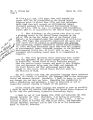
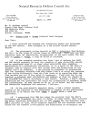
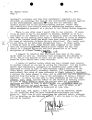
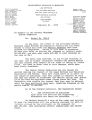
Show - An understanding that the water use per acreage could be increased from three acre feet per acre to four acre feet per acre. ' * . ' "' The Indians support continuation of the Bonneville Unit because they feel that is the best way for them to eventually get their water. When thftf^ferralAqreement was signed, the^repj^cement water was seen as conrTnlrFn^ The'Ute Indian Unit until recently has beenTTarge plan to develop over 700,000 a.f. of-water, with^ the Uinta and Bonneville Basins each getting about half." The Indians would have received 140,000 a.f. from this total, more than the amount deferred. Since th^JIriii-when_ addegL10-atb.er diversions wouliLde.pl.ete theColor^olTrverby abcut_3£g^Q0Q-J>f' more t h a n u t a h i s allo^/ 8d hVTheHJpoer BasinTompact, i t is not likely that the eventual Ute Indian Unit will look anything like the original concept. ^.One can only speculate at this time about how much the Indian attitude toward the Deferral Agreement s t i l l reflects the hope of eventually seeing the original Unit become a reality.- I t may be possible to replace the deferred 60,000 a.f. either by further diversions of streams, with attendant environmental problems, or by replacing the deferral lands with privately-owned land adjacent to the Green River in the Leland Bench area, which can be served by pumping. Since both methods of meeting the Agreement have unresolved problems, further commitments to the Uinta Basin portions of the ' Bonneville Unitmust be made carefully. ' . \ There is no question that the Secretary, both as a party to the Agreement and as Trustee, must fulfill the obligation to replace "thedeferred water, but i t is unclear at this moment how i t will bedone. In ouropinion, this puts the Indians in a precarious. position, because Utah's uncommitted share of the Colorado River is down to about 100,000 a.f. and the demand for oil shale and power plant development already easily exceed that figure. In. our-QPinion, our obligations under the Indian Deferral_Agi^ement should be faced befoxelioreJ^oloradQ River water ir"dTverte£jtQ-the Bonneville Basin. - - - ^-^ " ..'," '"", In addition to the above larger question, we must immediately recognize that continuation of the Bonneville Unit while negotiating about stream flows is likely to conflict with the Deferral Agreement. Any increase in stream flows to satisfy the legitimate concerns of the Forest Service, Utah, and BSFW would be viewed bythe Indians as an abrogation of the Agreement because water released for fish flows in the nonirrigation season would not benefit them. Bureau of"Reclamation believes that any discussion of increased stream flows in Rock Creek will cause the Indians to claim the 60,000 a.f. needed to irrigate the deferred acreage. Bonneville Basin diversion would be cut in half as a result. E*-I |