| Title |
Central Utah Project Litigation Documents |
| Description |
Correspondence and documents concerning litigation for the Bonneville Unit of the Central Utah Project; from the The Dorothy Harvey papers (1902-2005), a collection of materials focusing on the Central Utah Project (CUP), a water resource development program to use Utah's alloted share of the Colorado River. Includes correspondence, federal documents, project litigation materials. |
| Subject |
Central Utah Project. Bonneville Unit; Colorado River Storage Project (U.S.); Ute Indians--Claims; Water resources development--Environmental aspects--Utah; Natural resources--Environmental aspects--Utah; Natural resources--Management--Utah; Strawberry Aqueduct; Western Bands of Shoshoni Indians--Claims |
| Contributor |
Ruckel, H. Anthony; Oberhansly, Curtis K.; Owens, Wayne; Raskin, David C.; Leshy, John D.; Olsen, Dennis F.; Phillips, Howard K.; Barker, Robert W.; Hatch, Orrin G.; Blackwelder, Brent; Carlson, Peter; Lynn, Laurence E.; Horton, Jack O.; Reed, Nathaniel P.; Black, Kenneth E. |
| Additional Information |
Includes: Letters and documents concerning Sierra Club, et al. v. Gilbert Stamm, et al.; Water Resources Development Act of 1974; Letters from the Sierra Club Legal Defense Fund, Natural Resources Defense Council, the Environmental Policy Center; United States Court of Appeals, Tenth Circuit case No. 74-1425 Sierra Club, etc., et al. v. Gilbert Stamm, etc., et al.; Case before the Indian Claims Commission: Western Shoshone Identifiable Group etc., et al. v. United States of America; Memo from Department of the Interior on the Central Utah Project, Bonneville Unit; Study from Bureau of Sport Fisheries and Wildlife: Stream Flows Recommended For the Uinta Mountain Streams, Central Utah Project; U.S. Dept. of Interior Water Projects Review Office Preliminary Information and Data Sheets for Bonneville Unit |
| Spatial Coverage |
Uinta Basin (Utah and Colo.); Little Dell Reservoir (Utah); Currant Creek Dam (Utah); Uintah and Ouray Indian Reservation (Utah); Utah Lake (Utah); Provo River (Utah); Bonneville Basin (Utah); Salt Lake County (Utah); Jordanelle Reservoir (Utah); Uinta Mountains (Utah and Wyo.); Colorado River Watershed (Colo.-Mexico) |
| Collection Number and Name |
Accn2232 Bx 118 Fd 2; Dorothy Harvey papers |
| Rights Management |
Digital Image © 2010 University of Utah. All Rights Reserved. |
| Holding Institution |
J. Willard Marriott Library, University of Utah |
| Date |
1973; 1974; 1975; 1977; 1978; 1979; 1980 |
| Digitization Specifications |
Original scanned on Epson Expression 10000 XL and saved as 400 ppi TIFF. Display image generated in Contentdm. |
| Publisher |
Digitized by J. Willard Marriott Library, University of Utah |
| Type |
Text |
| ARK |
ark:/87278/s6hh6j1p |
| Setname |
wwdl_neh |
| ID |
1155349 |
| Reference URL |
https://collections.lib.utah.edu/ark:/87278/s6hh6j1p |
| Title |
Page 91 |
| Setname |
wwdl_neh |
| ID |
1155284 |
| OCR Text |
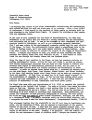
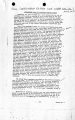
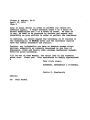
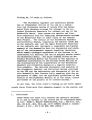
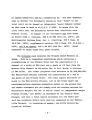
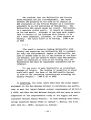
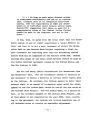
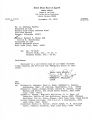
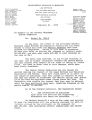
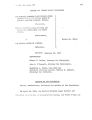
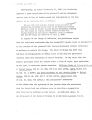
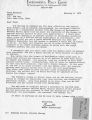
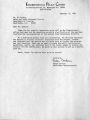
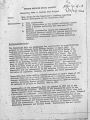
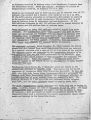
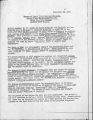
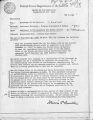
Show ENVIRONMENTAL POLICY CENTER 317 Pennsylvania Ave., S.E., Washington, D.C. 20003 (202) 547-6500 Fred Reimherr January 2, 197 8 CRCUP 727 6th Ave Salt Lake City, UTAH Dear Fred: I'm writing to commend you for your efforts on the Central Utah Project and to provide encouragement for continued vigorous pursuit of a responsible project from the Bureau of Reclamation. Dorothy Harvey spoke with me about the inability of the Bureau to provide written answers to your cost questionaire. I think that the Bureau's inability to provide answers to reasonable cuestions about costs of a billion dollar undertaking is significant. You probably should put out a press release pointing out that the Interior Department has had months to prepare a"reply but is unable to do so.^ In fact, all Interior can do is offer to meet with citizens in an effort postpone coming to grips with the tough economic probing that you are doing. I recommend that you don't meet with the Bureau until it answers your questions. Put out a press release on their failure to respond in writing. One^ tactic that the Bureau of Reclamation often tries when it feels that critics are closing in is to promise to take some action to modify the project. For example, they may promise to give some minimum stream flows. Unfortunately, when it comes to implementation of what they have promised, they don't follow through. In the 'case of the CUP it is quite possible that the Bureau will, for exaraole, premise some minimum stream flow to lull you into passiveness.* Then after your guard is down and your local organization has withered, the project will be built and will be operated as the Bureau has always wanted. The Bureau's scheme to divert water out of the National Forest should be stepped by preventing them from building the Strawberry ~ Collection System. Once this system is in place they can do the" diversion and get around stream flow agreements... You may wish to consider having a symposium on the CUP with distinguished experts talking about various asoects of the oroject and how deficient the proposal is from the standpoint of the economics, the environment, the consumer, the Indian, etc. If there is anything we can do here to help, please give a call. Sincerely, Brent Blackwelder cc: Barbara Polich, Dorothy Harvey |
| Reference URL |
https://collections.lib.utah.edu/ark:/87278/s6hh6j1p/1155284 |