| OCR Text |
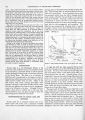
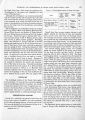
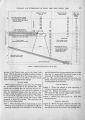
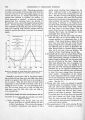
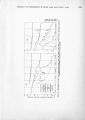
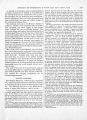
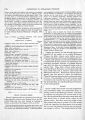
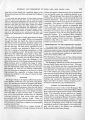
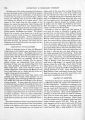
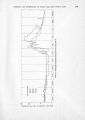
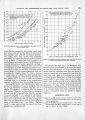
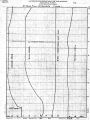
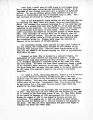
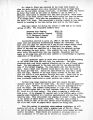
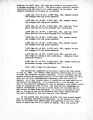
Show HYDROLOGY AND HYDROGEOLOGY OF NAVAJO LAKE, KANE COUNTY, UTAH €25 240 Z 22° tc o < 200 u. O </j 180 O z w 160 D O S 140 U; 120 100 80 60 40 *22 Precipitation index=average of precipitation recorded at 3 stations (Alton, Hatch, and . Pa of 53* rowan water 40 """56. )dur\r year zy* 55 lg firs 15. / l 9 . 45* *^k ""•46 t 7 mc .23 2 1 . / .18 irrths 17 2V / 49 X2 27.48 (Oct-A ^ 4 1 . •4V 5 pry" > 0 ,4 / 42 y^52 r 9 •58 5 6 7 8 9 10 11 12 PRECIPITATION INDEX, IN INCHES 13 14 FIGURE 14.-Relation between winter precipitation and runoff of Sevier River at Hatch, Utah. found that the average flow for a winter month could serve as an index for the Blue River of carryover effects, and that when used with the seasonal precipitation index, short time trends were practically eliminated. As suggested by figure 3, the flow of Sevier River at Hatch is chiefly base flow throughout the months September through February but fluctuates considerably during those months-generally reaching a minimum in January or February when much of the drainage basin has below-freezing temperatures, but at times the flow drops to a minimum in August or September because of high evapotranspiration draft and diversions for irrigation above the station. Because it is least likely to be affected by either summer losses or winter freezing, the runoff during November has been selected here to serve as an index of antecedent conditions-that is, of storage in the ground-water reservoir carried over from the preceding water year. By using the October-April precipitation index, as before, but adjusting the annual runoff by 0.68 of the average November streamflow (fig. 15), the coefficient of correlation is improved from 74 percent to 95 percent. Thus the carryover effects of storage in Navajo Lake and of ground-water base flow are seen to account for most of the variation in the relation between precipitation and the annual runoff. During the 5 years of the detailed Navajo Lake investigation lake water was discharged to the sink area during the month of November in only 1 year (1958). The base runoff in other years during this period was from ground-water contribution only. 240 220 200 180 160 140 120 u. 100 O z *• 80 60 40 20 1 1 1 1 1 1 Index of precipitation and antecedent flow = Precipitation index (fig.14) increased by 0.68 times average N 56, 57, 40* 5 5 v ^3 • ^ 51 28. 11' . 2 5 / / . 5 4 ' »46 41. 52*1 44. 49* . 4•5 .*4/ 27 /6 24*r • f -43 .20 15« .21 /is .19 .23 / / 42« •58 22. /•16 / ,17 6 8 10 12 14 16 18 20 INDEX OF PRECIPITATION AND ANTECEDENT FLOW 22 FIGURE 15.-Relation between precipitation and runoff of Sevier River at Hatch, Utah, adjusted for antecedent conditions. The ground-water reservoirs in the Markagunt Plateau are necessarily recharged by downward movement of water from melting snow and rain, including contributions from the subsurface storm flow that moves in solution channels and other permeable zones above the main water table. Most of the recharge area is within the Dixie National Forest, but it is likely that recharge occurs chiefly in areas where water can move underground most rapidly, notably in lava fields and talus and in the vicinity of limestone sinks and other closed depressions. In other words, the principal areas of recharge are not the forested areas, but the barren areas in the national forest where water infiltrates and descends to considerable depth too rapidly to support vegetation. REFERENCES CITED Averitt, Paul, 1962, Geology and coal resources of the Cedar Mountain quadrangle, Iron County, Utah: U.S. Geol. Survey Prof. Paper 389, 69 p. Cashion, W. B., 1961, Geology and fuels resources of the Order-ville- Glendale area, Kane County, Utah: U.S. Geol. Survey Coal Inv. Map C-49, scale 1: 62,500. |