| OCR Text |
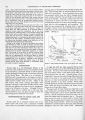
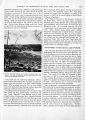
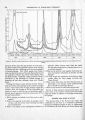
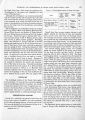
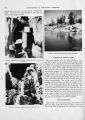
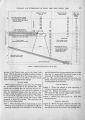
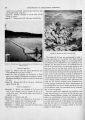
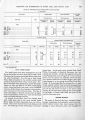
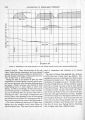
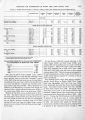
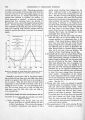
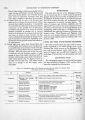
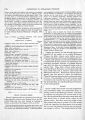
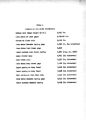
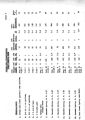
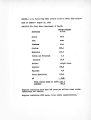
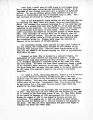
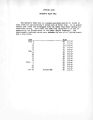
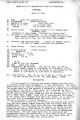
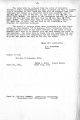
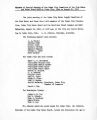
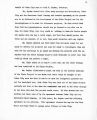
Show HYDROLOGY AND HYDROGEOLOGY OF NAVAJO LAKE, KANE COUNTY, UTAH C5 the Cedar City Corp., which states the purpose to be "investigation of the source and disposition of the waters of Navajo Lake." Although the investigation was concerned primarily with the waters entering and leaving Navajo Lake and with several specific questions concerning those waters, it was necessary to go rather far afield to find the answers to some questions, and hence the studies embrace an area far larger than that immediately surrounding Navajo Lake. The investigation was undertaken jointly by the Salt Lake City district offices of the Surface Water Branch, Ground Water Branch, and Quality of Water Branch, all in the Water Resources Division of the U.S. Geological Survey. Fieldwork began in October 1953 with a reconnaissance survey by M. T. Wilson, district engineer, and H. A. Waite, district geologist. Recording gages were installed on Navajo Lake and at several springs and creeks during the fall of 1953 and the summer of 1954; most of these were continued in operation until the spring of 1959. During the summers of 1954 and 1955, several detailed tests were made to determine the effect of releasing water into the Navajo Sinks separately and collectively and also into the Duck Creek Sinks. In conjunction with these tests, sodium fluorescein, a harmless chemical dye, was used as a water-coloring trace to record time of travel. Samples of water were also collected at selected locations for chemical analysis to determine the quality and characteristics of the water at those sites. Detailed tests during the summer of 1954 were made by D. L. Hill and those during the summer of 1955 by A. V. Maxwell, both hydraulic engineers with the Geological Survey. Field studies of the geology of the area were undertaken by H. E. Thomas during August 1954 and August 1955. HYDROLOGY The hydrologic studies of the Navajo Lake region were based upon: (1) records from a network of gaging stations installed especially for the project, (2) records of stage and contents of the lake, (3) special tests conducted at the Navajo Sinks and Duck Creek Sinks, (4) water-quality data, and (5) streamflow records from regular gaging stations in adjoining drainage basins. STEEAM-GAGING STATIONS Runoff for a relatively long period of time from the Navajo Lake region is included in the water measured at the following gaging stations, which are part of the Utah network operated by the Geological Survey in cooperation with the Utah State Engineer. 729-807 O-64 2 TABLE 1.-Primary gaging stations in Navajo Lake region Station Sevier River at Hatch North Fork Virgin River near Springdale Coal Creek near Cedar City___ __ _ . . Altitude (feet above mean sea level) 6,870 3,970 6,220 Drainage area (square miles) 340 350 80. 9 Period of record 1911-28, 1939-59 1925-59 1935-37, 1938-59 Mean discharge (cfs) 136 102 31. 4 Runoff from these primary gaging stations is only slightly affected by activities of man and therefore shows natural water yield from the drainage basins. The drainage area and the volume of runoff, however, are so great that any contributions from Navajo Lake have long since lost their identity. In the present study, the principal value of these stations has been that their long records serve to indicate the frequency of the conditions found during the 5 years 1954-58. (See p. Cll.) The Cascade Spring gaging station was installed within the cavern formed by the spring water, about 200 feet from the orifice (see figs. 4 and 5). It was in operation July 12, 1954, to March 31, 1959. The Duck Creek gaging station was operated from November 12, 1953, to March 21,1959. It was located just east (downstream) from the spring pond and thus measured the outflow from Duck Creek Spring (fig. 6) plus ephemeral surface runoff into this pond from tributaries that drain Long, Midway, and Sage Valleys and Deer Hollow. In order to measure this ephemeral runoff, a gaging station was installed in October 1957 on Midway Creek where it crosses the highway about 2 miles upstream from Duck Creek Spring. Runoff at this location has been as follows: 1958, 16 days (May 29-June 13), 1,440 acre-feet; 1959, 5 days (May 11-15), 85 acre-feet; 1960, 9 days (May 11-19), 336 acre-feet. Water from Midway Creek near this location could be diverted by construction of a short feeder canal (about 1,500 ft) to Navajo Lake. The Asay Creek gaging station was installed about a mile downstream from Lower Asay Spring and 2 miles upstream from West Asay Creek. Streamflow at this location includes discharge from Upper Asay Spring, Lower Asay Spring, and ephemeral flow from the drainage basin above. Although the drainage area above the gaging station is about 105 square miles, the creek channel above the springs is dry most of the time. The station was operated from July 13, 1954, to January 24, 1959. The Mammoth Spring gaging station 9 miles northeast of Navajo Lake measured the discharge of that |