| OCR Text |
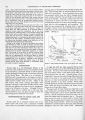
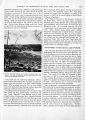
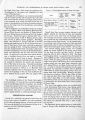
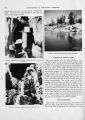
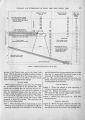
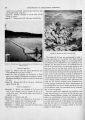
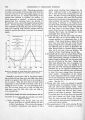
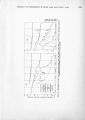
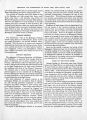
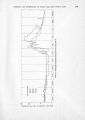
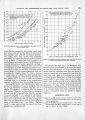
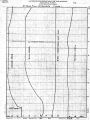
Show HYDROLOGY AND HYDROGEOLOGY OF NAVAJO LAKE, KANE COUNTY, UTAH C3 tributaries of Duck Creek (Midway Creek and Long Valley Creek), heading in the Cedar Breaks National Monument northwest of Navajo Lake, join to flow southeastward around and, in some places, across lava fields. Except during high flows, this water disappears into sinks and lava beds before reaching Duck Creek Spring. Thus the Duck Creek drainage basin adjoins the Navajo Lake basin on the north as well as the east. Navajo Lake, Midway Creek, and Duck Creek are all within the Dixie National Forest, where one of their primary uses is for recreation. FIGURE 2.-Lava flow forming east boundary of Navajo Lake in foreground. The ridge in background is the divide between the Great Basin and the Colorado River basin. Asay Creek has two ephemeral tributaries (Strawberry Creek and Swains Creek) that drain an extensive plateau area east and south of the Duck Creek drainage basin. The principal perennial flow of Asay Creek comes from the Lower Asay Spring, which is about &y2 miles east-northeast of the Duck Creek Sinks. The Mammoth Creek drainage basin lies north of the Duck Creek and Asay Creek basins. Like Duck and Asay Creeks, Mammoth Creek depends upon a large spring for most of its perennial flow. Mammoth Spring is about 8 miles north of Duck Creek Spring. Asay Creek and Mammoth Creek join to form the Sevier River, the principal stream in central Utah. Contributions from Mammoth Spring and Asay Creek just below Asay Spring ordinarily constitute more than half the flow in the upper Sevier River. For the years of available record, the combined annual flow from these springs has ranged from 49 percent (in 1955) to 65 percent (in 1957) of the annual runoff of Sevier River at Hatch. (See fig. 3.) Coal Creek, a tributary of the Escalante Valley in the Great Basin, drains the steep slopes extending westward from Cedar Breaks, and its drainage basin lies immediately west of the basins of Duck Creek and Mammoth Creek. At its nearest approach, the Coal Creek basin is 4 miles northwest from the Navajo Lake basin. Thus, Navajo Lake, whose entire outflow disappears underground, is nestled between the headwaters of several streams that flow into arid and semi-arid regions where water is in great demand for irrigation of land and for municipal and domestic use. In particular, Cedar City in the Coal Creek basin, the largest city in southern Utah and only 25 miles from Navajo Lake, has long been interested in the lake as a possible source of municipal supply. DEVELOPMENT OF THE NAVAJO LAKE PROBLEM Over the years, there have been several proposals for development and use of the water of Navajo Lake. In 1919 a preliminary survey was made to determine the feasibility of diverting water from the lake to Cedar City by means of a dam, tunnels, canals, and the Coal Creek channel; the cost of the project was deemed prohibitive at that time. In 1922 it was proposed that a plug be placed in Cascade Cave, from which Cascade Spring emerges, to force that supply to the Sevier River drainage. Prior to 1933, a dike was constructed 6 feet high to separate the western three-fourths of the lakebed from the sinkholes in the eastern part, thus creating a permanent lake for fishing and other recreation. The height of the dike was increased in 1939 and again in 1945 to a total height of about 17 feet when a gated 24-inch pipe was installed beneath the spillway to regulate the storage of some 1,300 acre-feet of water. That quantity can be retained in the lake or released to the Navajo Sinks as desired. Each development or proposal for development of the lake water led to controversies and generally to objections by those who had established rights to water in the adjoining drainage basins. The controversies arose because of varying opinions and doubts concerning the relation of Navajo Lake to springs contributing water to adjoining streams. To answer some of the more common questions, several reconnaissance investigations were made relative to the waters of the lake, but the resulting reports have generally been inconclusive and in some instances in disagreement. Stubbins (1922) reported, on the basis of several tests, that dye |