| OCR Text |
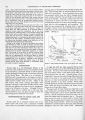
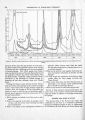
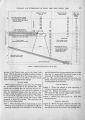
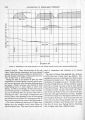
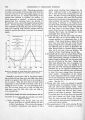
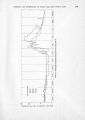
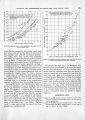
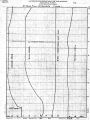
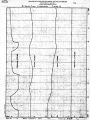
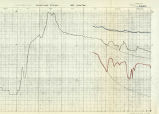
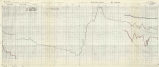
Show C24 CONTRIBUTIONS TO STREAM-BASIN HYDROLOGY (1) An annual maximum during May or June when snow is melting in the tributary area (reaching an instantaneous peak of 314 cfs on June 6, 1957), corresponding to the annual freshet in mountain streams in the region; (2) a gradual but progressive diminution in discharge through July to December; (3) sharp minor peaks in discharge, generally during the summer, caused by cloudburst storms in the tributary area and interrupting the declining trend for a few days (for example, after rain Aug. 23-25, 1955, amounting to 2.6 in. at Cedar Breaks Lodge, the discharge of Mammoth Spring increased from 4.4 cfs on Aug. 23 to 20 cfs on Aug. 26, and decreased to 7.8 cfs 2 days later) ; and (4) relatively constant minimum flow throughout the winter and until snow began to melt the following spring (recorded minimum less than 2 cfs in April 1957). This hydrograph for Mammoth Spring is probably typical of all perennial springs in the region; the gradual diminution in flow (component 2) to a minimum sustained throughout the winter (component 3) indicates that the base flow is contributed by ground water. The discharge of the numerous ephemeral or wet-weather springs in the region probably corresponds to components (1) and (3) of the hydrograph of Mammoth Spring-flow of water from melting snow or intense rain that has entered the ground through sinkholes or permeable surfaces such as lava blocks or talus, and that flows rapidly through solution channels or permeable beds until it reappears at the spring orifice. The entire flow system is probably well above the regional water table, beneath which all rocks are saturated, although a small perched water table may develop temporarily during the period of spring discharge. The underground flow to these ephemeral springs is similar to the subsurface storm flow described by Hursh and Brater (1941) in a forested region where water moves rapidly through porous soil and forest litter to reach streams as rapidly as if the flow had been overland. Such interflow is probably dominant in the higher parts of the Markagunt Plateau; sinks are especially numerous in the area north of Navajo Lake (see pi. 3) and water flowing into them or entering the extensive outcrops of basalt soon reappears at the surface, whether in the valley bottoms or along steep slopes. Navajo Lake undoubtedly receives subsurface inflow from the Midway Creek drainage basin to the north and provides storage and regulation of that water. Farther north the outflow from Mammoth Spring is predominantly interflow, although there is a small sustained discharge from ground water. In general, the ground-water reservoir in these uplands appears to be too far below the surface to be tapped by wells. For evidence of the existence of major ground-water reservoirs under the Markagunt Plateau capable of stor-* ing enough water to provide considerable regulation of streamflow, it is necessary to continue downstream to the eastern edge of the plateau where those reservoirs discharge into the streams, in part through large springs and about an equal part by seepage into the^ stream channels to form the base flow of the river. The Sevier River at Hatch includes principally the water from Asay Creek and Mammoth Creek, whose drainage basins constitute 95 percent of the total drainage basin above Hatch. In the period 1954-58 the average rate of discharge of Sevier River at Hatch during the minimum month ranged from 31 to 79 percent of the average annual rate of discharge. By contrast, for Coal Creek at Cedar City, which drains the steep western slope of the Markagunt Plateau, the minimum monthly rate of discharge ranged from 18 to 42 percent of the average annual rate in the same period, indicative that base flow and therefore ground water constitutes a smaller proportion of the total flow of Coal Creek. The regulating effect of storage in Navajo Lake and in contiguous ground-water reservoirs upon the flow of the Sevier River at Hatch is inferred indirectly in the process of attempting to develop relations between precipitation and runoff for the drainage basin. There are no long-term records of precipitation within that basin, but regular Weather Bureau records have been collected at three stations (Alton, Hatch, and Parowan) near the edges of the drainage basin and these cover most of the peroid of runoff records at Hatch. Precipitation during the growing season-May through September-contributes chiefly to soil moisture and plant growth and negligibly to runoff. * In the 7 months from October to April, when evapotranspiration is least, precipitation contributes most effectively to runoff, both in the annual freshet and in the sustained base flow. The relation between the mean October to April precipitation at these three stations and the water-year runoff at Hatch indicates that there has been less runoff per unit of precipitation in recent years than in earlier years. (See fig. 14.) Runoff in the period 1916-24 was 65 percent higher than that in the later years 1946-58 for the same precipitation index. Similar time trends have been reported in other streams in the West and have been attributed in part to the influence of ground-water storage (McDonald and Lang-bein, 1948). In an analysis of similar trends in relation between precipitation and runoff at Dillon, Colo., Peck (1954) |