| OCR Text |
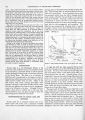
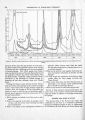
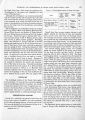
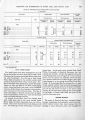
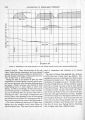
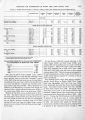
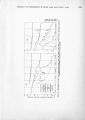
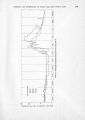
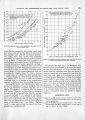
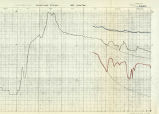
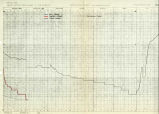
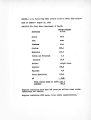
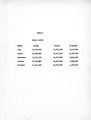
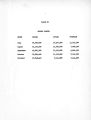
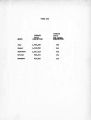
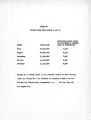
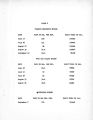
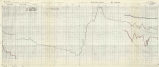
Show HYDROLOGY AND HYDROGEOLOGY OF NAVAJO LAKE, KANE COUNTY, UTAH C15 twice that of Duck Creek Spring. The hydro-graphs for the two springs are quite similar in general trend, doubtless reflecting the similarities of snow runoff and rain runoff for the general area, In detail, however, there are marked differences, especially when Navajo Lake levels remain higher than the cutoff dike throughout the summer and fall. At such times the flow of Duck Creek Spring is well sustained and temporarily exceeds that of Mammoth Spring. WATER REGIMEN AND SUPPLY OF NAVAJO T.AKTTI 11. The computed Avater supply for Navajo Lake shown on page Cll (550 acre-ft in 1956, 630 in 1955, 3,700 in 1954, 5,930 in 1957, and 11,710 in 1958) did not include quite all the water that enters or leaves the lake area. During the late fall and winter, when evaporation may be presumed to be minimal, when several small perennial springs continue to flow into the lake, and when there is no discharge to the east part, the lake level west of the dike was observed to decline at a rate of 0.02 foot per day, indicating a net depletion of about 4 or 5 cfs. The water thus lost may reappear, at least in part, at several springs which rise west of and at levels comparable to Cascade Spring but south of the western part of the lake. 12. During 1958, the inflow to Navajo Lake was about 12,000 acre-feet, or 3.0 acre-feet per acre of the 4,000-acre drainage basin that is topographically tributary to the lake. As of April 1 of that year, the water content at the Midway Valley (12M2) snow course (alt 9,400 ft) was 31.5 inches, and at the Duck Creek (12M4) snow course (alt 8,560 ft) 18.7 inches. Assuming that the mean of these two snow courses is representative of Navajo Lake basin, the snow storage, equivalent to 2.1 acre-feet of water per acre, indicates a water supply of about 8,000 acre-feet within the Navajo Lake drainage basin. Thus the inflow to the lake was 50 percent greater than could have been obtained from all the snow within the drainage basin. 13. Evidence that Navajo Lake receives water by underground flow from beyond the limits of its drainage basin is forthcoming from statements by several long-time residents of the region. Mr. Alvin Larson reports that Roaring Spring (along the north shore of Navajo Lake and several feet above normal lake level) flows only when water is entering sinks in Midway Valley and stops within 2 days after the sinks go dry. Mr. George Smith has reported turbid flow in Roaring Spring after exceptional cloudbursts to the north. Roaring Spring was not seen to flow during th« field studies by the authors. 14. The annual water supply to Navajo Lake during the period 1954-1958 ranged from 14 percent (1955, 1956) to 283 percent (1958) of the computed 21- year average. These variations reflect the variations in precipitation but are far greater in magnitude because the water supply to the lake represents the residue from a contributing area after deductions for evapotranspiration and for filling of ground-water reservoirs or aquifers, which probably vary only slightly from year to year. Additional developments of the surface supply would require considerable holdover storage capacity in order to equalize the large variations and provide a consistent year-to-year water supply, and such a development could have a significant effect on present water rights in both the Sevier and Virgin River basins. UNDERGROUND FACILITIES FOR STORAGE AND MOVEMENT OF WATER 15. The numerous perennial springs in the Navajo Lake region, by continuing to flow throughout rainless periods, are evidence that there is some storage of water underground. The special tests of the Navajo Sinks, during which the outflow from Cascade and Duck Creek Springs increased long before the actual arrival of water used in the tests, and the requirement that a velocity of 2 fps (feet per second) would be necessary for the short travel time between the sinks and Cascade Spring, indicate that at least some of the subterranean water is confined under pressure. These tests also indicate that there is some degree of interconnection, particularly with respect to the reservoirs, channels, or compartments that receive water from individual sinks. 16. There is also conclusive evidence, however, that the numerous sinks and springs in the Navajo Lake region do not constitute entries and exits for a single extensive ground-water reservoir. Instead, they indicate the existence of numerous compartments or channels that may be isolated or very indirectly connected with each other. One example of such isolation is provided by the two Asay Springs, of which one is clearly connected with Duck Creek Sinks, the other completely independent, Another example is the spring on the ridge south of Navajo Lake (the source of water for |