| OCR Text |
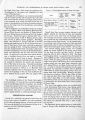
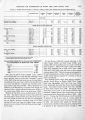
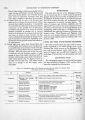
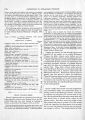
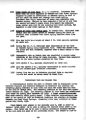
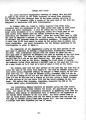
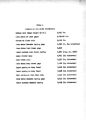
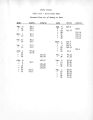
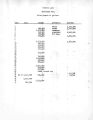
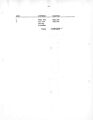
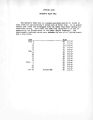
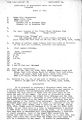
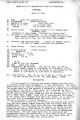
Show C16 CONTRIBUTIONS TO STREAM-BASIN HYDROLOGY Navajo Lake Lodge) which is presumably fed by water moving northward; Cascade Spring and and several others farther west evidently derive some water by southward movement from the same ridge in addition to that from Navajo Lake. 17. At present there are no wells in the Navajo Lake region and no evidence of a saturated zone within the rocks that underlie the plateau. It is possible that test drilling would result in discovery of such a zone, but it is also possible that the prevailing circulation underground is by means of solution channels developed at random and at various levels in the limestone; the existing sinks provide one means of access to these channels, and the water is subsequently discharged at springs which may be perennial or ephemeral, depending upon the amount of underground storage and frequency of replenishment. 18. During high-water years when Navajo Sinks are covered before the maximum snow-runoff period, it is possible that the movement of water from the surface to a ground-water source is temporarily reversed. Since the lower part of the sink area is relatively near the limestone aquifer, a large supply of water from higher elevations north of the lake could develop a static head in the groundwater course greater than the depth of water in the lake over the sink area. The orifices would then act as springs to the lake supply rather than sinks. HYDROGEOLOGY The rocks that crop out on the Markagunt Plateau are of Cenozoic age (pi. 1), which is also the age of all geologic features that have been of significance in the development of Navajo Lake, of the sinks and springs, and of the surface channels and underground routes that characterize the present drainage pattern. The rocks of Cenozoic age, however, constitute only the upper 2,000 feet or less of the massive block that forms the plateau; beneath them are flat-lying Mesozoic rocks aggregating 6,000-10,000 feet in thickness and also a considerable but unknown thickness of Paleozoic sedimentary rocks. These Mesozoic and Paleozoic rocks crop out in the slopes bordering the plateau of which some have been mapped recently by Cashion (1961) and Averitt (1962). ROCKS AND THEIR WATER-BEARING PROPERTIES The rocks of the Navajo Lake region may be conveniently considered in two broad groups-rocks of the Cenozoic Era, which crop out on the Markagunt Plateau, and the pre-Cenozoic rocks, which do not. The rocks of Cenozoic age are sufficiently important in the hydrology of Navajo Lake to be discussed as individual units. PRE-CENOZOIC ROCKS The stratigraphic sequence in the Navajo Lake region has been described by Gregory (1950), and the following table is adapted from his summary. TABLE 4.-Generalized section of Pre- [After Gregory Age Cretaceous Jurassic Jurassic and Triassic (?) Triassic Permian Cenozoic rock formations in eastern Iron County, Utah , 1950, p. 26, 27. U=unconformity] Formation Kaiparowits Formation. U - Wahweap and Straight Cliff sandstones. U- Tropic Formation Dakota Sandstone Winsor Formation Entrada Sandstone Carmel Formation Navajo Sandstone Chinle Formation Shinarump Member Moenkopi Formation Kaibab Limestone -U- -u- -u- -u- -u- Character Terrestrial sandstone shale, and conglomerate. Marine and brackish-water sandstones. Terrestrial and marine shale and sandstone. Terrestrial sandstone and conglomerate. Marine sandstone. Marine limestone and gypsum. Marine gypsiferous sandstone. Marine limestone and shale. Terrestrial sandstone. Terrestrial shale, sandstone, and conglomerate. Terrestrial conglomeratic sandstone. -U- -U- -u- -u- -u- Marine and terrestrial sandstone, limestone, and shale. -U-Marine dolomitic limestone. Thickness (feet) 400-900 700-1, 150 200-850 10-40 150-300 40-150 150-250 300-450 1, 400-1, 900 1, 000-3, 000 40-80 600-1, 440 0-200 |