| Title |
Navajo Lake and Cedar City water supply |
| Description |
Reports, meeting minutes and correspondence on Navajo Lake and on Cedar City's interest in tapping it for their water supply |
| Subject |
Water resources development--Utah--Kane County; Water-supply--Utah--Cedar City; Water resources development--Utah--Iron County; Water-supply--Utah--Iron County |
| Contributor |
Wilson, Milton Theurer, 1898-; Thomas, H. E. (Harold Edgar), 1906-; Ashcroft, Theron M.; Lowman, Jack G.; Adams, Clamont B. |
| Alternate Title |
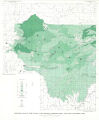
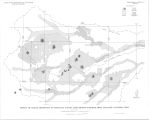
Hydrology and hydrogeology of Navajo Lake, Kane County, Utah; Geologic map of the Navajo Lake region, Garffield, Iron, and Kane counties, Utah [cartographic material]; Effect of basalt eruptions on drainage, Navajo Lake region, Garffield, Iron, and Kane counties, Utah [cartographic material]; Sinks and closed depressions in the Navajo Lake region, Garffield, Iron, and Kane counties, Utah; Progress report, investigation of the water resources of Navajo Lake area near Hatch, Utah; Brief report of a study of Cedar City culinary water supply made during 1948 |
| Additional Information |
Includes: Hydrology and hydrogeology of Navajo Lake, Kane County, Utah / by M. T. Wilson and H. E. Thomas (USGS Professional Paper 417-C, published 1964; Geologic map of the Navajo Lake region, Garffield, Iron, and Kane counties, Utah [cartographic material]; Effect of basalt eruptions on drainage, Navajo Lake region, Garffield, Iron, and Kane counties, Utah [cartographic material]; Sinks and closed depressions in the Navajo Lake region, Garffield, Iron, and Kane counties, Utah [cartographic material]; Progress report, investigation of the water resources of Navajo Lake area near Hatch, Utah / USGS Salt Lake District, January 1955; A brief report of a study of Cedar City culinary water supply made during 1948 / T.M. Ashcroft and J. G. Lowman Engineer's report on the culinary water used by Cedar City Corporation for the year 1960 / Clamont B. Adams, 1961; Application to appropriate water for municipal purposes [Cedar City, seeking water tributary to Deep Creek, Virgin River drainage, dated 1951]; Minutes of Cedar City Committee of the Utah Water and Power Board, meeting of Aug. 26, 1953; Cooperative agreement for investigation of water resources [between USGS and Cedar City re Navajo Lake] |
| Spatial Coverage |
Navajo Lake (Utah); Cascade Spring (Kane County, Utah); Virgin River; Duck Creek (Kane County, Utah); Asay Creek (Utah); Deep Creek (Iron County, Utah); Virgin River Watershed |
| Collection Number and Name |
Accn0823 bx 30 fd 5; John S. Boyden papers |
| Rights Management |
Digital Image Copyright 2009, University of Utah. All Rights Reserved. |
| Holding Institution |
J. Willard Marriott Library, University of Utah |
| Date |
1948; 1951; 1953; 1954; 1955; 1961; 1964 |
| Digitization Specifications |
Original scanned on Epson Expression 10000 XL and saved as 400 ppi TIFF. Display image generated in CONTENTdm. |
| Publisher |
Digitized by J. Willard Marriott Library, University of Utah |
| Type |
Text |
| ARK |
ark:/87278/s6df6q4g |
| Setname |
wwdl_neh |
| ID |
1147845 |
| Reference URL |
https://collections.lib.utah.edu/ark:/87278/s6df6q4g |
| Title |
Page 8 |
| Setname |
wwdl_neh |
| ID |
1147728 |
| OCR Text |
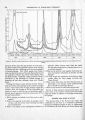
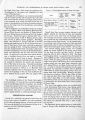
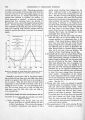
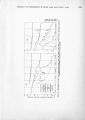
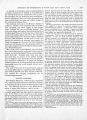
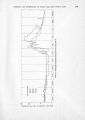
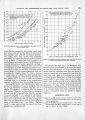
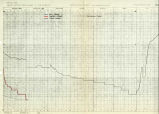
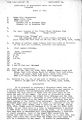
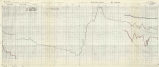
Show C4 CONTRIBUTIONS TO STREAM-BASIN HYDROLOGY FIGURE 3.-Monthly runoff of Sevier River at Hatch, and comparison with combined discharges of Mammoth Spring and Asay Creek below Asay Spring. placed in 46 cfs (cubic feet per second) of water entering Duck Creek Sinks appeared at Lower Asay Spring in 4 hours and that a discharge of 30 cfs was measured at Cascade Spring. Fife (1924) agreed that Navajo Lake was the direct source of Cascade Spring but found no conclusive evidence that Duck Creek Spring was fed from the lake. Parkinson (1934) produced a small fluctuation in the discharge of Cascade Spring by damming off and then releasing water into Navajo Sinks. Finding that there is some relation between Navajo Lake and various other springs in the vicinity is enough to set a water user's teeth on edge, because it begs the question: How will changes at Navajo Lake affect the supply of water to which he has an established right? Several specific questions, therefore, become part of the Navajo Lake problem: 1. Which springs are related to the lake, and to what extent ? 2. What is the capacity of the sinks, in storage or rate of flow, and can all the water entering the sinks be accounted for? 3. What is the nature of the underground channel or reservoir which receives water from the sinks? Do individual sinks lead to a common reservoir, or to isolated channels ? 4. What are the natural water supplies (including seasonal and annual variations), at the lake and the springs ? 5. To what extent does regulation of the Navajo Lake outflow affect the water supply of Sevier and Virgin Rivers ? 6. What water, other than that from Navajo Lake, is discharged at the springs which contribute base flow to the Sevier and Virgin Rivers ? 7. What are the sources of water entering the lake ? Several of these questions demand quantitative answers, which in turn require continuing records of lake stage and outflow in addition to discharge records from the springs. PURPOSE AND SCOPE OF STUDY The present study of the Navajo Lake region was undertaken on the basis of a cooperative agreement among the Geological Survey of the U.S. Department of the Interior, the Utah Water and Power Board, and |
| Reference URL |
https://collections.lib.utah.edu/ark:/87278/s6df6q4g/1147728 |