| OCR Text |
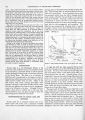
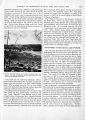
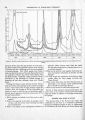
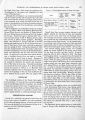
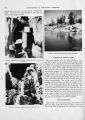
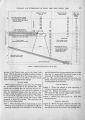
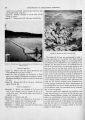
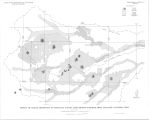
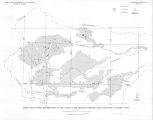
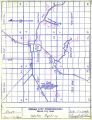
Show C2 CONTRIBUTIONS TO STREAM-BASIN HYDROLOGY region. Some of the lava flowed down the preexisting valleys, and some flowed across and formed barricades in former drainage channels. The broad valley whose lower part is now occupied by Asay Creek has been barricaded in two places by basalt flows. Duck Creek occupies the part of the valley between the two barricades, and Navajo Lake occupies the part above the upper basalt barricade. The original eastward drainage is maintained solely by underground channels between Navajo Sinks and Duck Creek Spring, and between Duck Creek Sinks and Lower Asay Spring. The valleys occupied by Navajo Lake and Dry Valley to the southeast of it are still broad where they terminate abruptly at the steep southwestern face of the plateau. Clearly, the Virgin River has added materially to its drainage basin by headward erosion along this escarpment, and by this same process which is continuing today it will eventually capture and drain Navajo Lake by surface piracy, if complete underground piracy does not occur first. Cascade Spring is evidence that underground piracy is in progress and has already diverted 40 percent of the lake outflow. Available records, however, do not indicate any substantial change in the distribution of flow from Navajo Lake in the past several decades. Studies in the vicinity of Navajo Lake indicate that subsurface movement of water is chiefly in solution channels rather than in a continuous body of saturated sediments; but hydro-logic data for the entire Markagunt Plateau show that it is underlain by major ground-water reservoirs capable of storing enough water to provide considerable regulation of stream-flow. The runoff of Sevier River at Hatch correlates fairly well with the October-April precipitation upon the drainage basin, but by adjustment for the carryover effects of storage in the ground-water reservoir, the coefficient of correlation is increased from 74 to 95 percent. Recharge to this reservoir is from precipitation, chiefly upon barren areas in the Dixie National Forest where water descends to considerable depth too rapidly to support vegetation. INTRODUCTION Navajo Lake is on the Markagunt Plateau in the northwest corner of Kane County, in southwestern Utah. I t was formed by a lava flow which cut off the natural surface drainage of Duck Creek, a headwater tributary of the Sevier River. The lake is at an altitude of 9,035 feet and is exceptional in the degree to which it depends upon subterranean movement of water, both for inflow and for outflow from the lake. Inflow to the lake during most years, coming principally from springs, is enough to show that the lake receives water from an area greater than that shown by topographic maps to be tributary to the lake. Although it has no surface outlet, there is outflow into a sink area that, until impeded by man, was great enough to drain the lake during parts of some low-water years. HYDROGEOGBAPHY OF NAVAJO LAKE AND ENVIRONS Navajo Lake has a maximum surface area of 1.1 square miles (714 acres) and a maximum recorded water volume (in June 1958) of 8,700 acre-feet of usable storage, plus an estimated 2,000 acre-feet of dead storage. The drainage basin in which the lake lies has an area of 6.2 square miles. It has long been obvious that the principal outflow from the lake is through several sinks (herein called the 'Navajo Sinks') in the eastern part of the lakebed. Starting in 1933, a low dike was constructed to restrict the lake at low stages to the western three-fourths of its area, thus creating a permanent lake for fish propagation and recreation. The dike has been progressively enlarged until it reached a height of about 17 feet above the floor of the lake in 1945, but it is still overtopped during years of abundant inflow. (See fig. 1.) ^ \ v :** IK --^4 WAGE J3IMOTAKE Diker*,Gatfing stations Upper Bear Spring Cascade Sprin3\ Gaging station\>\ *<Ota North Fork Virgin I T . '-4 On Rimr RIVER /DRAINAGE] y Duck Creek Sinks ~a Duck Creek CY < ^ ^° Spring S'" [Duck ..f~ : N»*V. """ Gaging station Lake Location • FIGURE 1.-iMap showing drainage areas of the Navajo Lake region. A ridge 400-1,000 feet high separates Navajo Lake from the drainage basin of North Fork Virgin Eiver to the south. So steep is the south face of this ridge that the land surface within a mile south of the lake is at lower altitude than the lake. Cascade Spring ("Cascade Falls") rises on this south-facing slope almost due south of the sinks in the eastern part of the lakebed, and two or three small springs or seeps rise at comparable altitudes in the same vicinity. Water from Cascade Spring is used for irrigation at lower altitudes, both within the North Fork basin and farther downstream in the Virgin River basin. The upper part of Duck Creek was originally in the same valley that is occupied by Navajo Lake (formerly called "Duck Lake"), but it is now separated from the lake by a divide composed of black lava that is 80 or more feet higher than the lakebed (fig. 2). The principal source of water in Duck Creek is Duck Creek Spring, which emerges about 3 miles east of the eastern limit of the Navajo lakebed. From this spring, Duck Creek flows northeastward for about 2y2 miles and then disappears into the Duck Creek Sinks. Ephemeral |